Mongolia, referred to as Mongolia, is a single-half presidential republic in East Asia, located at the intersection of the Russian Federation and the People’s Republic of China It is a landlocked country, the capital and largest city is Ulaanbaatar. Mongolia is divided into 21 provinces and a municipality and capital Ulaanbaatar. Its territory is 1,564,116 square kilometers. Currently Mongolia’s The territory is the ancient Huns, Xianbei, Rouran, Turks, Shigas, Uighurs, Khitan, etc., where many nomads lived and established political power. Genghis Khan established the Mongol Empire in 1206, and his grandson Kublai established in 1271 After the Yuan Dynasty, the Mongols returned to the Mongolian grasslands after the fall of the Yuan Dynasty, but they often clashed with the Ming Dynasty at the border. From the 16th to the 17th century, Mongolia began to be influenced by Tibetan Buddhism. At the end of the 17th century, the entire territory of Mongolia was included in the Qing Dynasty. After the collapse, Outer Mongolia declared independence as the Bokdo Khanate, but it was not recognized by many countries. It was not until the People's Revolution of 1921 achieved independence under the control of Soviet Russia. In 1924, the socialist Mongolian People's Republic was established and became a satellite under the influence of the Soviet Union. It was recognized by the Republic of China in 1945. After the drastic changes in Eastern Europe in 1989, Mongolia also experienced a democratic revolution in early 1990, which led to the promulgation of a new constitution implementing a multi-party system in 1992, and it began to market Economic transition. With a land area of 1,564,116 square kilometers, Mongolia is the 19th largest country in the world by land area and the second largest landlocked country in the world after Kazakhstan. With a population of 3.3 million, it is the lowest population density in the world. Sovereign country. Mongolia has less arable land, most of the country is covered by grassland, the north and west are many mountains, the south is the Gobi Desert, 30% of the population is nomadic or semi-nomadic. Mongolia’s main religion is Tibetan Buddhism, and the main ethnic group It is Mongolian, and there are also other ethnic minorities such as Kazakhs and Tuvas in the west, with a per capita GDP of 4,700 US dollars (2019). Mongolia joined the World Trade Organization in 1997 and continues to seek to increase its regional economy and trade.
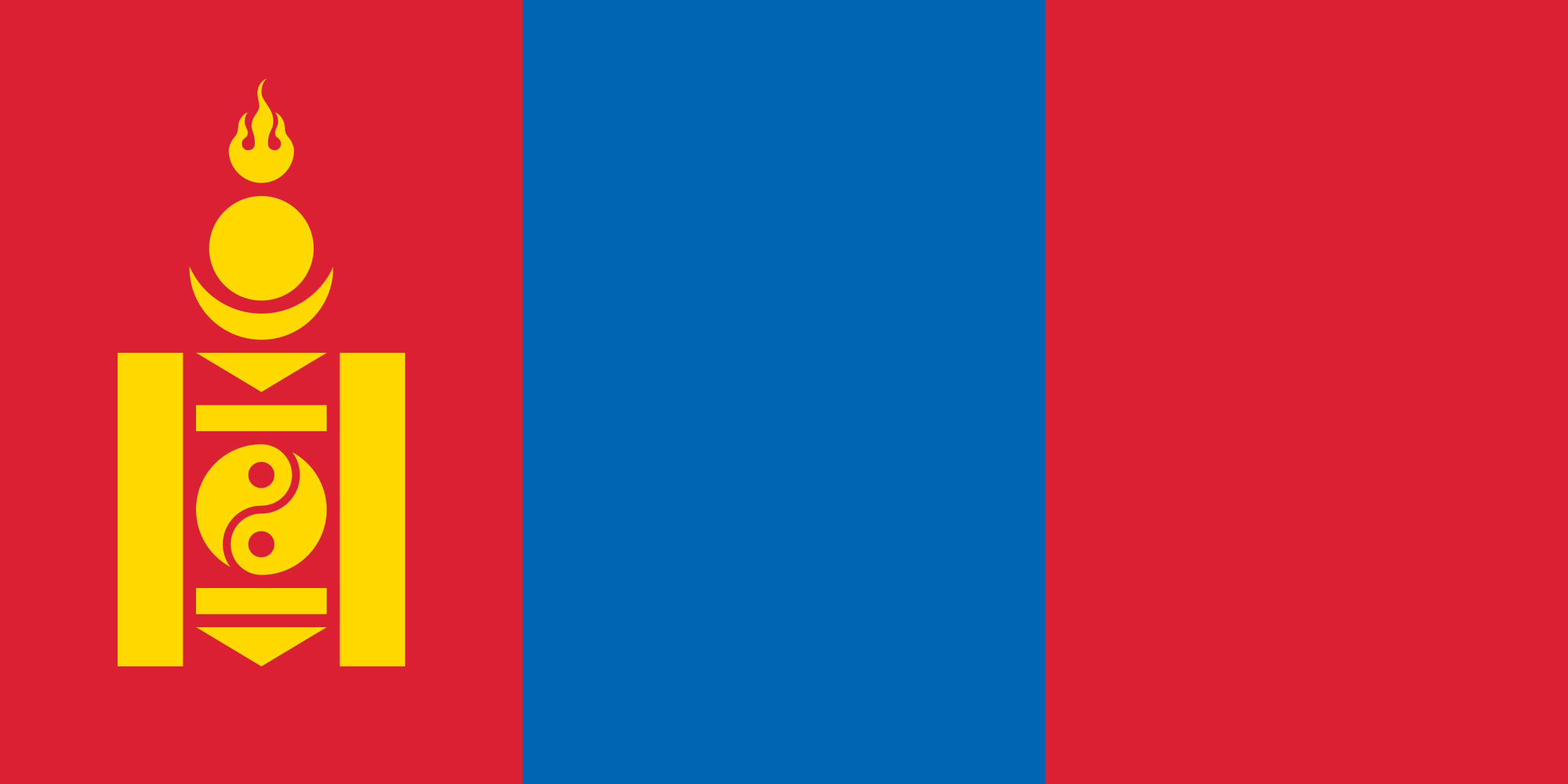
Flag (Flag of Mongolia)
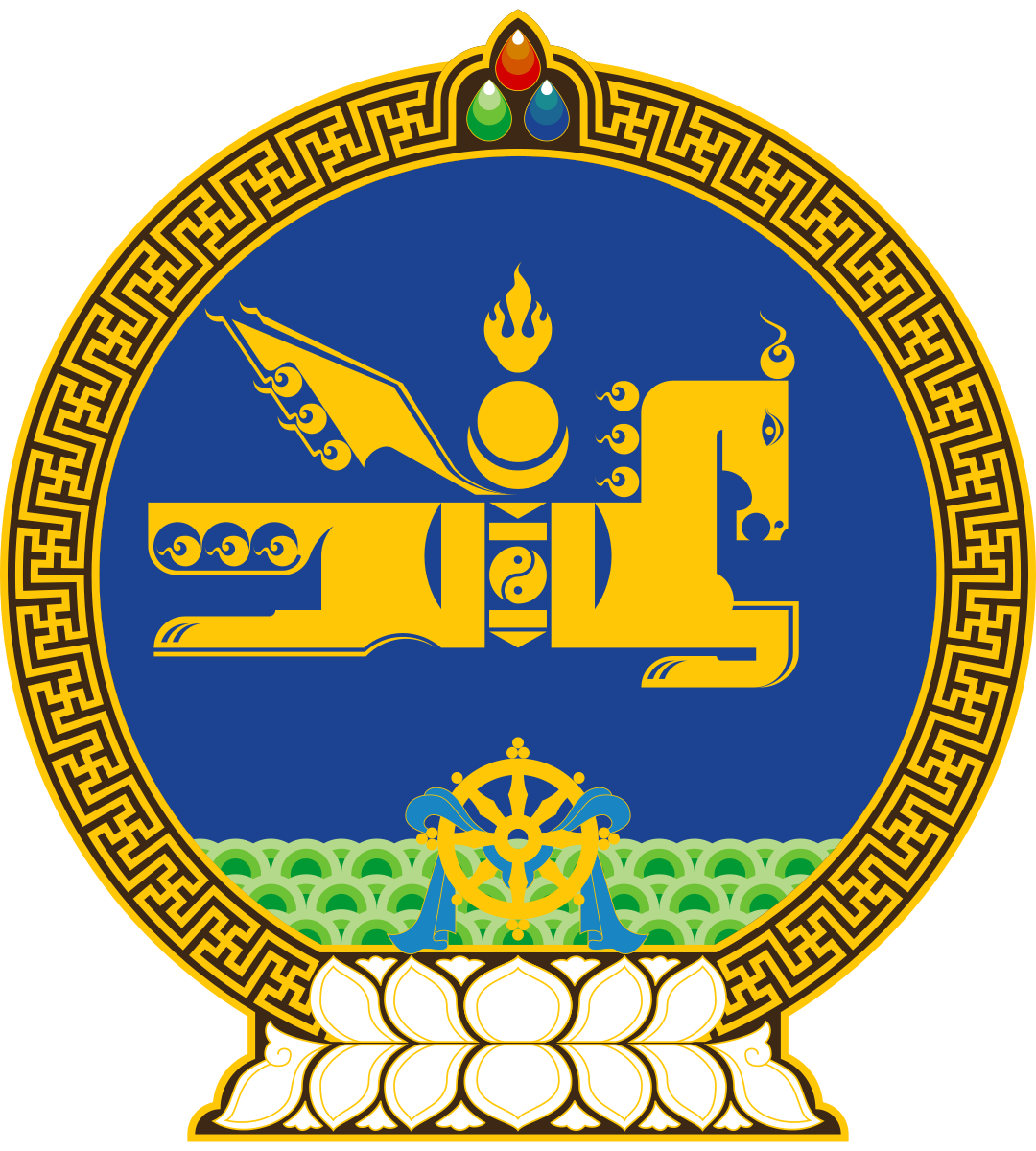
Emblem (National Emblem)
🎵 Anthem (Instrumental)
🎤 Anthem (Vocal)
Our vast fatherland,
With great history,
Our people are strong,
Determined to defend freedom.
Long live Mongolia,
Victory and prosperity,
Our country shall forever prosper,
The power of the people shall endure.
Монголын их түүхт
Өргөн уудам орон
Манай ард түмэн
Эрх чөлөөгөө хамгаална.
Монгол улс мандан бадраг
Ялалт, амар амгалан
Манай улс хөгжин цэцэглэнэ
Ард түмний хүч үүрд мөнх.
Mongolia
Report ErrorIntroduction
About the National Anthem
National Anthem of Mongolia-'Mongolian National Anthem'-Монгол Улсын Төрийн Дуулал
'Mongolian National Anthem' was called before 1991 'The National Anthem of the People's Republic of Mongolia', composed in 1950, was composed by Biliq Damudingsurun (1919-1991) and Lubsanzhab Murdorji (1919-1996).
'Mongolian National Anthem' was called before 1991 'The National Anthem of the People's Republic of Mongolia', composed in 1950, was composed by Biliq Damudingsurun (1919-1991) and Lubsanzhab Murdorji (1919-1996).
Flag Meaning
The ratio is 1:2. The three vertical flags are red and blue, and the yellow totem on the left symbolizes Mongolian culture. Red symbolizes victory and represents progress and prosperity; blue represents loyalty to the motherland and represents the sky ;yellow The color totem is 'Suoyongbu', representing freedom and independence. The upper flame represents auspiciousness, and the three flames in the middle represent the past, present and future. The sun and moon below represent prosperity. The triangle represents the arrow, and the rectangle symbolizes the defense of the country. The yin and yang patterns symbolize harmony, and the two straight rectangles on the left and right symbolize the unity of the people over the city wall.
Emblem Meaning
The National Emblem of Mongolia was opened in 1992. It is circular, with a pattern of 'a thousand characters less than the head' on the outer ring, and the top is the three treasures. In the middle is the wind horse carrying Soyongbu (a symbol of the soul in Central Asia). Below are green hills, Falun, hada and lotus seats.
🔗 External Resources & Travel Guide
- 📖 Wikipedia: Mongolia - History, politics, and geography
- 📊 CIA World Factbook: Mongolia - Official government statistics & maps
- ✈️ Wikivoyage: Mongolia - Travel guide, attractions, and transport