The Islamic Republic of Pakistan, commonly known as Pakistan, is located in South Asia and has an actual control area of 881,913 square kilometers. It is adjacent to India to the east and to the south. It is the Indian Ocean, bordering Iran to the west, Afghanistan to the northwest, and Xinjiang in the northeast. Except for the tropical climate in the south, the rest has a subtropical climate. The south is hot and humid, affected by the monsoon, and the rainy season is long; the north is dry and cold, with some The place is covered with snow all year round.
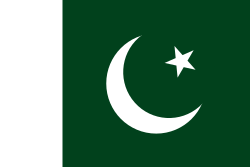
Flag (Flag of Pakistan)
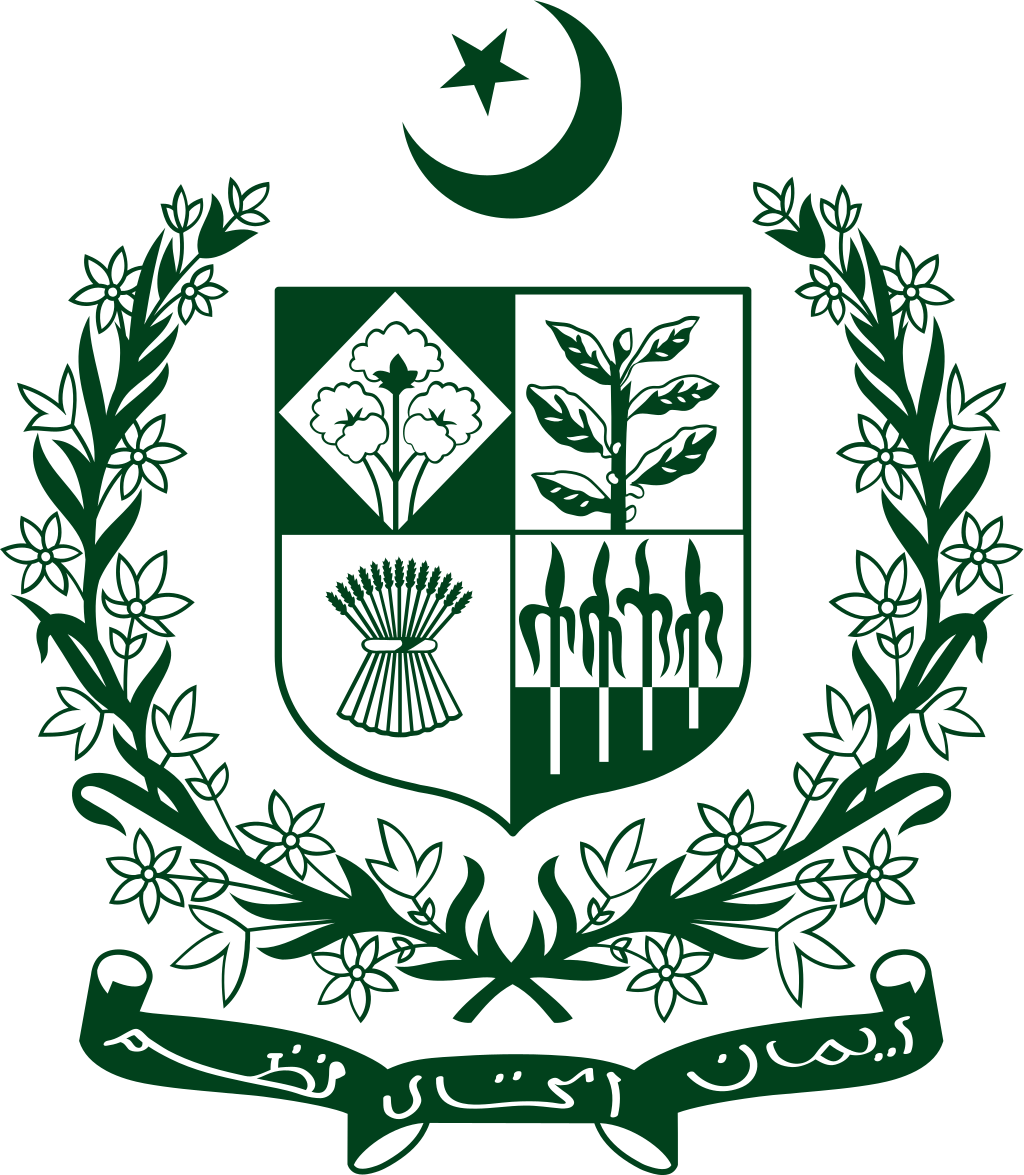
Emblem (National Emblem)
🎵 Anthem (Instrumental)
🎤 Anthem (Vocal)
Blessed be the sacred land,
Happy be the bounteous realm.
Symbol of high resolve,
Land of Pakistan!
Blessed be the citadel of faith.
The order of this sacred land,
Is the might of the brotherhood of the people.
May the nation, the country, and the state,
Shine in glory everlasting!
Blessed be the goal of our ambition.
پاک سرزمین شاد باد
کشور حسین شاد باد
تو نشان عزم عالی شان
ارض پاکستان!
مرکز یقین شاد باد
پاک سرزمین کا نظام
قوت اخوت عوام
قوم، ملک، سلطنت
پائندہ تابندہ باد!
شاد باد منزل مراد
Pakistan
Report ErrorIntroduction
About the National Anthem
National Anthem-'Bless the Sacred Land'-پاک سرزمین شاد باد
'Bless the Sacred Land' is the national anthem of the Islamic Republic of Pakistan It was composed by Hafeez Jalandhari in 1952, and the music was produced by Ahmad G. Chagla in 1949, before the lyrics. Although in classical Urdu, the national anthem has a strong Persian influence, and it is only used in Pakistan’s lingua franca. The word 'ka' is used in Urdu—so that the lyrics can be understood in both Urdu and Persian.
'Bless the Sacred Land' is the national anthem of the Islamic Republic of Pakistan It was composed by Hafeez Jalandhari in 1952, and the music was produced by Ahmad G. Chagla in 1949, before the lyrics. Although in classical Urdu, the national anthem has a strong Persian influence, and it is only used in Pakistan’s lingua franca. The word 'ka' is used in Urdu—so that the lyrics can be understood in both Urdu and Persian.
Flag Meaning
Ratio 2:3. White background on the left 1/4; the right is a green background with a crescent moon and stars in the middle. Green symbolizes prosperity and represents Islam. White symbolizes peace and represents other citizens except Islam, which originally represented East Pakistan. The crescent moon symbolizes Progress and development, the five-pointed star symbolizes light and knowledge, and also represents Islam.
Emblem Meaning
The color of the national emblem of Pakistan is the same as that of the national flag; dark green and white. The top is the five-pointed star and the crescent pattern; the middle; It is a coat of arms. The face of the shield is divided into four parts, which are painted with cotton, wheat, tea, and jute. The two sides of the coat of arms are decorated with Xiuying flowers, which are the national flowers of Pakistan. The green ribbon at the bottom is used on Urdu says 'Pious, Unity, Commandment'.
🔗 External Resources & Travel Guide
- 📖 Wikipedia: Pakistan - History, politics, and geography
- 📊 CIA World Factbook: Pakistan - Official government statistics & maps
- ✈️ Wikivoyage: Pakistan - Travel guide, attractions, and transport