The Republic of Poland, commonly known as Poland, is a republic located in Central Europe, bordering the Baltic Sea to the north, Germany to the west, and the Czech Republic to the southwest It is bordered by Slovakia to the south, Ukraine to the southeast, Belarus to the east, Lithuania and the Kaliningrad region of Russia to the northeast. It covers an area of 312,679 square kilometers, ranking tenth in Europe; with a population of about 37.97 million, ranking ninth in Europe.

Flag (Flag of Poland)
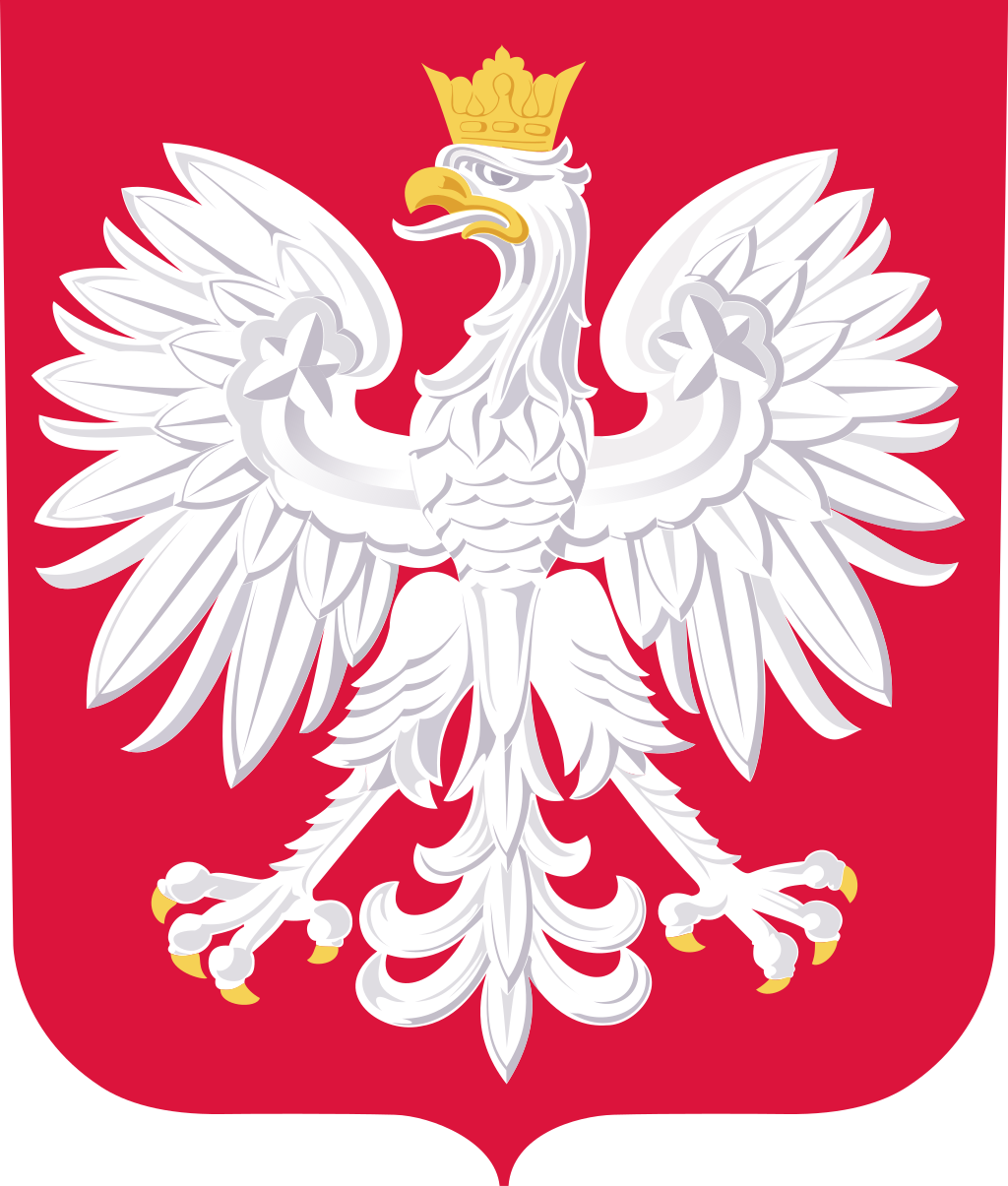
Emblem (National Emblem)
🎵 Anthem (Instrumental)
🎤 Anthem (Vocal)
Poland has not yet perished,
So long as we still live.
What the foreign force has taken from us,
We shall retrieve with a sabre.
Chorus:
March, march, Dąbrowski,
From Italy to Poland.
Under your command
We shall rejoin the nation.
We'll cross the Vistula, we'll cross the Warta,
We shall be Polish.
Bonaparte has given us the example
Of how we should prevail.
Jeszcze Polska nie zginęła,
Kiedy my żyjemy.
Co nam obca przemoc wzięła,
Szablą odbierzemy.
Marsz, marsz, Dąbrowski,
Z ziemi włoskiej do Polski.
Za twoim przewodem
Złączym się z narodem.
Poland
Report ErrorIntroduction
About the National Anthem
Poland Is Not Yet Lost-'Poland Is Not Yet Lost'-Mazurek Dąbrowskiego
'Poland Is Not Yet Lost', is Poland's national anthem and Polish intangible heritage, 1797 Written by Joseph Wibicki. The original song is 'Ode to the Polish Legion of Italy'.
'Poland Is Not Yet Lost', is Poland's national anthem and Polish intangible heritage, 1797 Written by Joseph Wibicki. The original song is 'Ode to the Polish Legion of Italy'.
Flag Meaning
The ratio is 5:8. Two horizontal flags of white and red. Red represents the popular for fighting for independence. The blood, white, expresses the desire for peace. The design is derived from the legend of the establishment of the capital. Legend has it that in the 9th century, the Polish founder Lech was instructed by the gods to see a white eagle flying in the red sunset in Warsaw. The capital.
Emblem Meaning
The Polish National Emblem (Godło Polski) is based on a red shield, with a white eagle wearing a golden crown, looking to the left, with a golden beak and golden claws.
It is said that Lech, the founder of Poland, settled in a place where a white eagle was nesting. The current pattern began in 1927, and the golden crown on the eagle's head was removed during the communist period. The current national emblem is governed by the 28th Constitution of the 1997 Constitution. Protected by the first paragraph of Article.
It is said that Lech, the founder of Poland, settled in a place where a white eagle was nesting. The current pattern began in 1927, and the golden crown on the eagle's head was removed during the communist period. The current national emblem is governed by the 28th Constitution of the 1997 Constitution. Protected by the first paragraph of Article.
🔗 External Resources & Travel Guide
- 📖 Wikipedia: Poland - History, politics, and geography
- 📊 CIA World Factbook: Poland - Official government statistics & maps
- ✈️ Wikivoyage: Poland - Travel guide, attractions, and transport