The People's Republic of Bangladesh, commonly known as Bangladesh, a South Asian country, is the eastern part of Bangladesh and is located in the north of the Bay of Bengal; A small part of the southeast mountainous area is adjacent to Myanmar, and other parts are bordered by India. The vast majority of the country is the Brahmaputra alluvial plain, and the sea area located in the Bay of Bengal is roughly equal to the land area. 98% of Bangladesh The population speaks Bengali, and the state religion is Islam; a population of 170 million, ranking third in the world's Muslim countries, second only to Indonesia and Pakistan, with a population density of 1138 people per square kilometer (ranked seventh in the world), ranking first among non-pocket countries The first largest city is the capital Dhaka, and the second largest city Chittagong is also the country’s largest port.
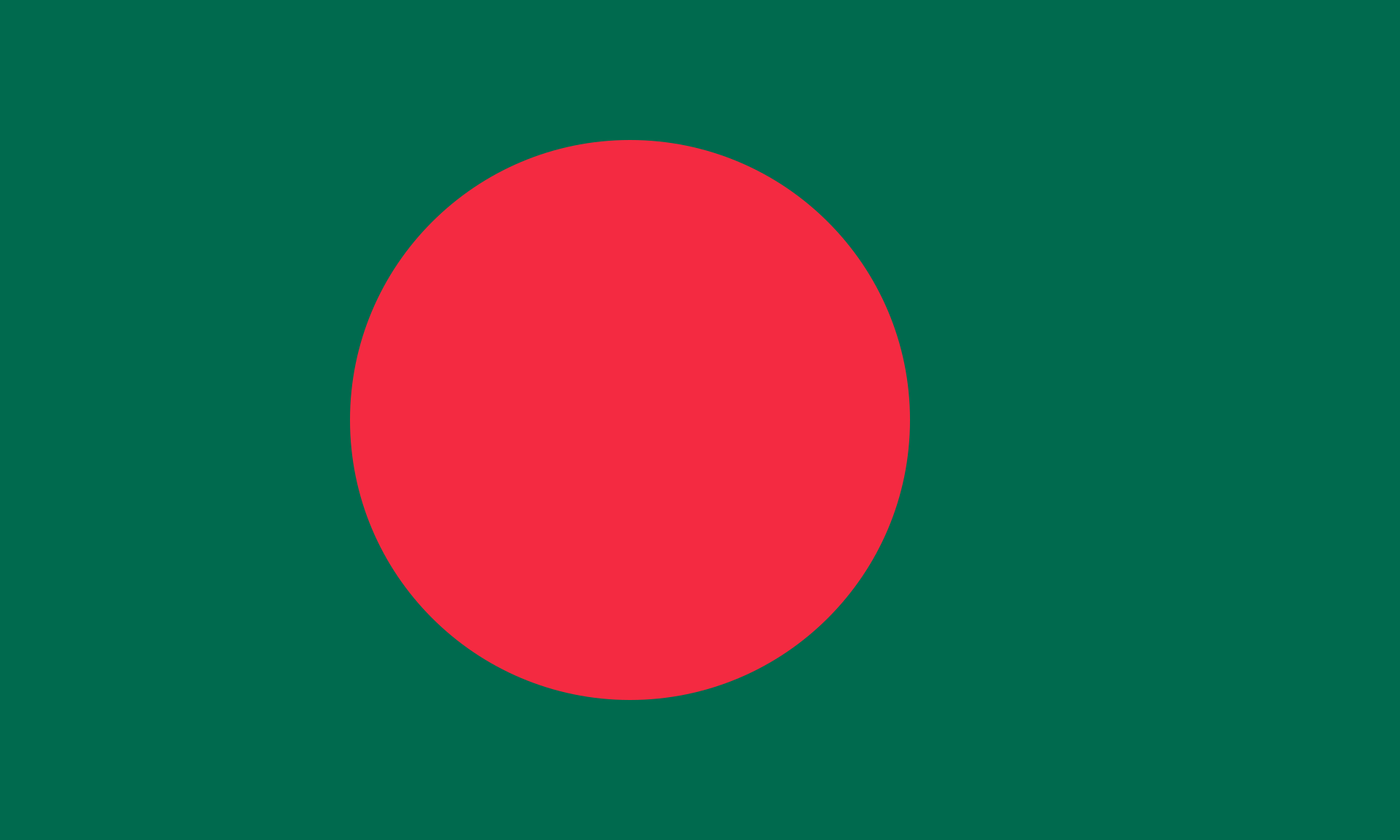
Flag (Flag of Bangladesh)
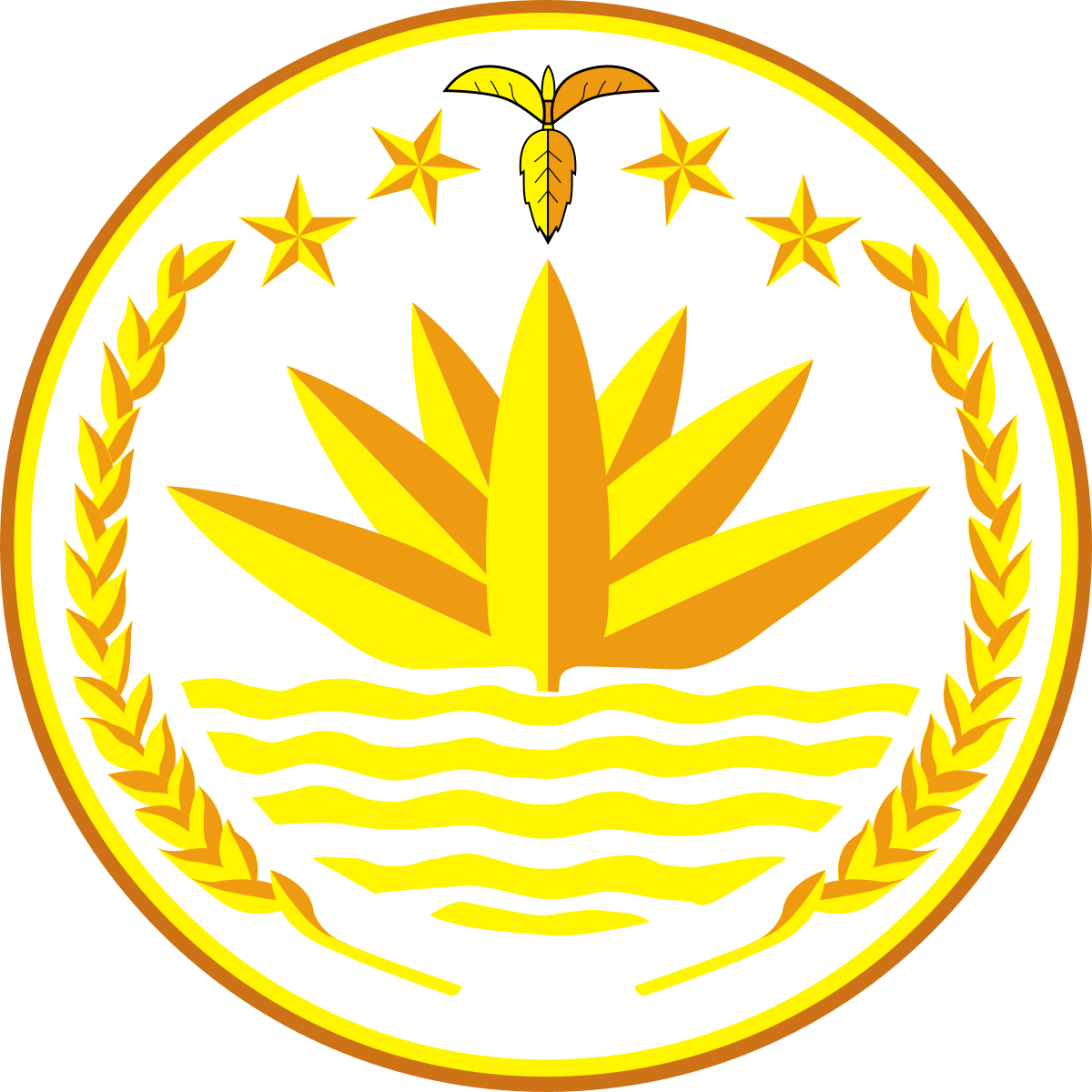
Emblem (National Emblem)
🎵 Anthem (Instrumental)
🎤 Anthem (Vocal)
My golden Bengal, I love you.
Forever your skies, your air set my heart in tune
As if it were a flute.
O mother! In spring the fragrance from your mango groves
Makes me wild with joy,
Ah, what thrill!
O mother! In autumn your fields of paddy smiling
What beauty I have seen!
What shade, what beauty, what affection, what tenderness!
What a quilt have you spread at the feet of banyan trees and along the bank of every river!
O mother, words from your lips are like nectar to my ears.
Ah, what a thrill!
If sadness, O mother, casts a gloom on your face,
My eyes are filled with tears!
My golden Bengal, I love you.
আমার সোনার বাংলা, আমি তোমায় ভালোবাসি।
চিরদিন তোমার আকাশ, তোমার বাতাস, আমার প্রাণে বাজায় বাঁশি॥
ও মা, ফাগুনে তোর আমের বনে ঘ্রানে পাগল করে,
মরি হায়, হায় রে-
ও মা, অঘ্রানে তোর ভরা ক্ষেতে কি দেখেছি আমি কি দেখেছি মধুর হাসি॥
কী শোভা, কী ছায়া গো, কী স্নেহ, কী মায়া গো-
কী আঁচল বিছায়েছ বটের মূলে, নদীর কূলে কূলে।
মা, তোর মুখের বাণী আমার কানে লাগে সুধার মতো,
মরি হায়, হায় রে-
মা, তোর বদনখানি মলিন হলে, ও মা, আমি নয়নজলে ভাসি॥
সোনার বাংলা, আমি তোমায় ভালোবাসি।
Bangladesh
Report ErrorIntroduction
About the National Anthem
My Golden Bengal-'Golden Bengal'-আমার সোনার বাংলা
'Golden Bengal' is a song composed and composed by the famous Indian poet Tagore (he is also the author of the Indian national anthem), and the hymn melody is taken from the song of Baul singer Gagan Harkara' 'Ami Kothay Pabo Tare', the song is set as Dadra Tala. Modern instrumental performance is arranged by Samar Das. It was completed in 1906, the year after the partition of Bangladesh. This is one of his series of works to exhort the Bengalis to unite.
'Golden Bengal' is a song composed and composed by the famous Indian poet Tagore (he is also the author of the Indian national anthem), and the hymn melody is taken from the song of Baul singer Gagan Harkara' 'Ami Kothay Pabo Tare', the song is set as Dadra Tala. Modern instrumental performance is arranged by Samar Das. It was completed in 1906, the year after the partition of Bangladesh. This is one of his series of works to exhort the Bengalis to unite.
Flag Meaning
(Details not available yet)
Emblem Meaning
The national emblem of Bangladesh was opened on February 28, 1972. It is circular. The central pattern is the national flower water lily. The water below The pattern symbolizes the geographical environment of the local rivers. The jute above is the main local cash crop, and the two sides are decorated with rice ears. The four five-pointed stars on both sides of the jute represent the four principles of nation-building: nationalism, socialism, secularism and democracy Ism.
🔗 External Resources & Travel Guide
- 📖 Wikipedia: Bangladesh - History, politics, and geography
- 📊 CIA World Factbook: Bangladesh - Official government statistics & maps
- ✈️ Wikivoyage: Bangladesh - Travel guide, attractions, and transport