The Kingdom of Spain, commonly known as Spain (España), ancient books translated as Japanese Sbania, España or Esyl translated Youya, the Bible was once translated as 'Sebanya'. It is a constitutional monarchy located in southwestern Europe. It is located on the Iberian Peninsula with Portugal and Andorra. It borders France and Andorra in the northeast. Occupies four-fifths of the Iberian Peninsula. Its territory also includes the Balearic Islands in the Mediterranean Sea, the Canary Islands in the Atlantic Ocean, and Ceuta and Melilla in northern Africa. The capital and largest city is Madrid. Spain has been affected by many foreign influences since prehistoric times. In the Middle Ages, there were many countries in the country. A single country was established in the 15th century. In modern history, it is an important birthplace of culture in other regions. The prosperity of its global empire brought the world The impact is that 500 million people in the world use Spanish today, making Spanish the third most spoken language in the world and the second most native speaker. Spain is a medium-developed country with high social welfare and a per capita GDP in the world. About 30,000 US dollars. In recent years, due to the economic crisis, the unemployment rate in developed countries is relatively high.
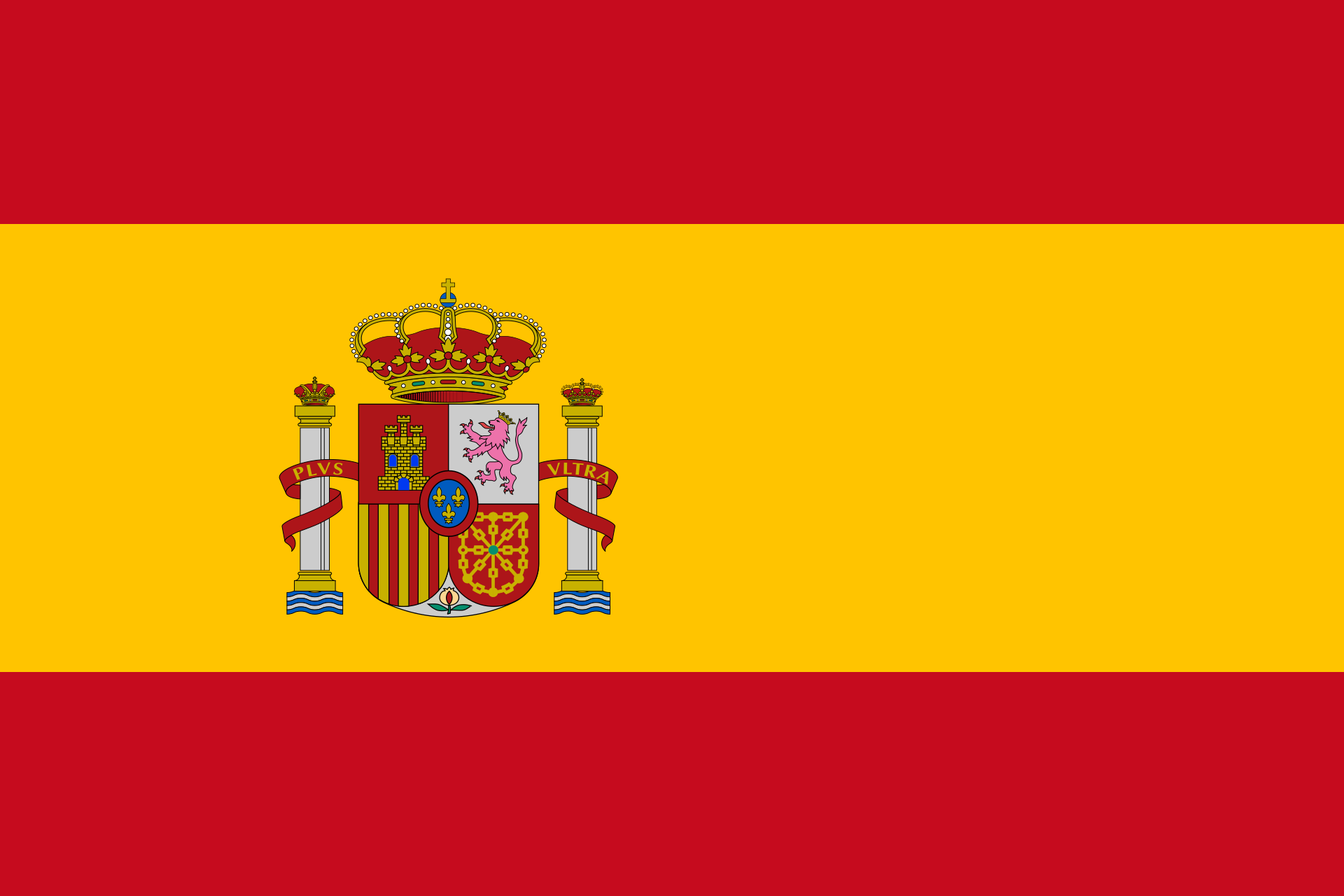
Flag (Flag of Spain)
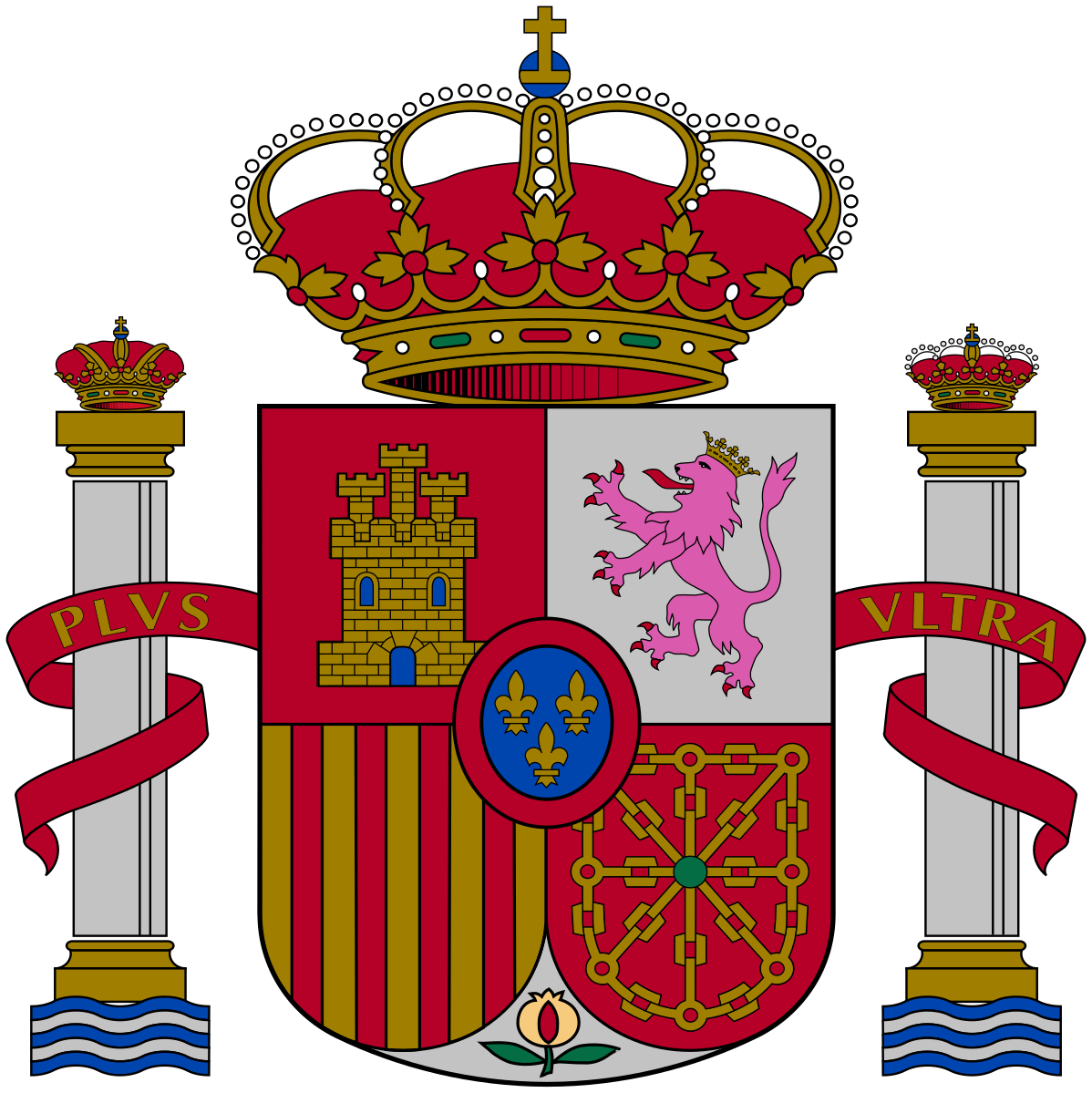
Emblem (National Emblem)
🎵 Anthem (Instrumental)
🎤 Anthem (Vocal)
Glory to Spain!
The people shout the cry of freedom.
Glory to Spain!
The people shout the cry of freedom.
¡Viva España!
Cantemos todos juntos
Con distinta voz
Y un solo corazón
¡Viva España!
Desde los verdes valles
Al inmenso mar
Un himno de hermandad
Spain
Report ErrorIntroduction
About the National Anthem
The Royal March-'Royal March'-Marcha Real
'Royal March', originally the first military music, later became the Spanish national anthem, without lyrics.
'Royal March', originally the first military music, later became the Spanish national anthem, without lyrics.
Flag Meaning
The ratio is 2:3. The red, yellow and red three-color horizontal flag, the center left is the national emblem. The five coats of arms in the national emblem represent the five regions of Spain. The golden castle on the red background represents Castile, the white lion represents Leon, the vertical red and yellow stripes represent Aragon, the red and gold staggered pattern represents Navarre, and the pomegranate below. The flower represents Granada. The two pillars on the left are the Pillars of Hercules, representing Spain and Spanish-speaking countries. The red belt originally wrote Latin 'Here is the end of the world' (Plus Ultra), but it was changed to 'We are going to a farther world' (or 'to a farther place').
Emblem Meaning
The national emblem of the Kingdom of Spain is a combination of eight coats of arms:
The red-lined golden castle represents the Kingdom of Castile
The white-lined red lion represents the Kingdom of Leon
Red and yellow bars of the Kingdom of Aragon
Golden chains of the Kingdom of Navarre
Granada Green leaves and red pomegranate
The family coat of arms of the Bourbon lilies
The Spanish crown
The Austrian crown, commemorating Charles V
The national emblem is flanked by the Pillars of Hercules, the ancient name of the Strait of Gibraltar. Bring the text PLUS ULTRA is Latin, meaning beyond the sea, there is territory.
The red-lined golden castle represents the Kingdom of Castile
The white-lined red lion represents the Kingdom of Leon
Red and yellow bars of the Kingdom of Aragon
Golden chains of the Kingdom of Navarre
Granada Green leaves and red pomegranate
The family coat of arms of the Bourbon lilies
The Spanish crown
The Austrian crown, commemorating Charles V
The national emblem is flanked by the Pillars of Hercules, the ancient name of the Strait of Gibraltar. Bring the text PLUS ULTRA is Latin, meaning beyond the sea, there is territory.
🔗 External Resources & Travel Guide
- 📖 Wikipedia: Spain - History, politics, and geography
- 📊 CIA World Factbook: Spain - Official government statistics & maps
- ✈️ Wikivoyage: Spain - Travel guide, attractions, and transport