The Republic of China is a democratic republic located in East Asia. The first democratic republic in Asia. From its establishment in 1912 to its withdrawal from the United Nations in 1971, it was the representative regime of 'China' widely recognized internationally; now due to actual control of the territory and political conditions, 'Taiwan' is often used internationally as the general term .At present, the actual area of its rule is 36,197 square kilometers. It is the Taiwan Islands, the Penghu Islands, the Jinmen Islands off the coast of Fujian, the Wuqiuli Island and the Mazu Islands, and the Dongsha Islands, Taiping Island and Zhongzhou Reefs of the South China Sea Islands. The capital is Taipei City, the largest city is New Taipei City. The total population under its jurisdiction is about 23.6 million, mainly composed of the aborigines of Taiwan and the Han. The national language is the natural language used by the inherent ethnic groups and the Taiwanese sign language. Standard Chinese is commonly used, Taiwan South Island Chinese language, Hokkien, Hakka, Wuqiu and Mazu dialect, etc., written in Chinese characters.
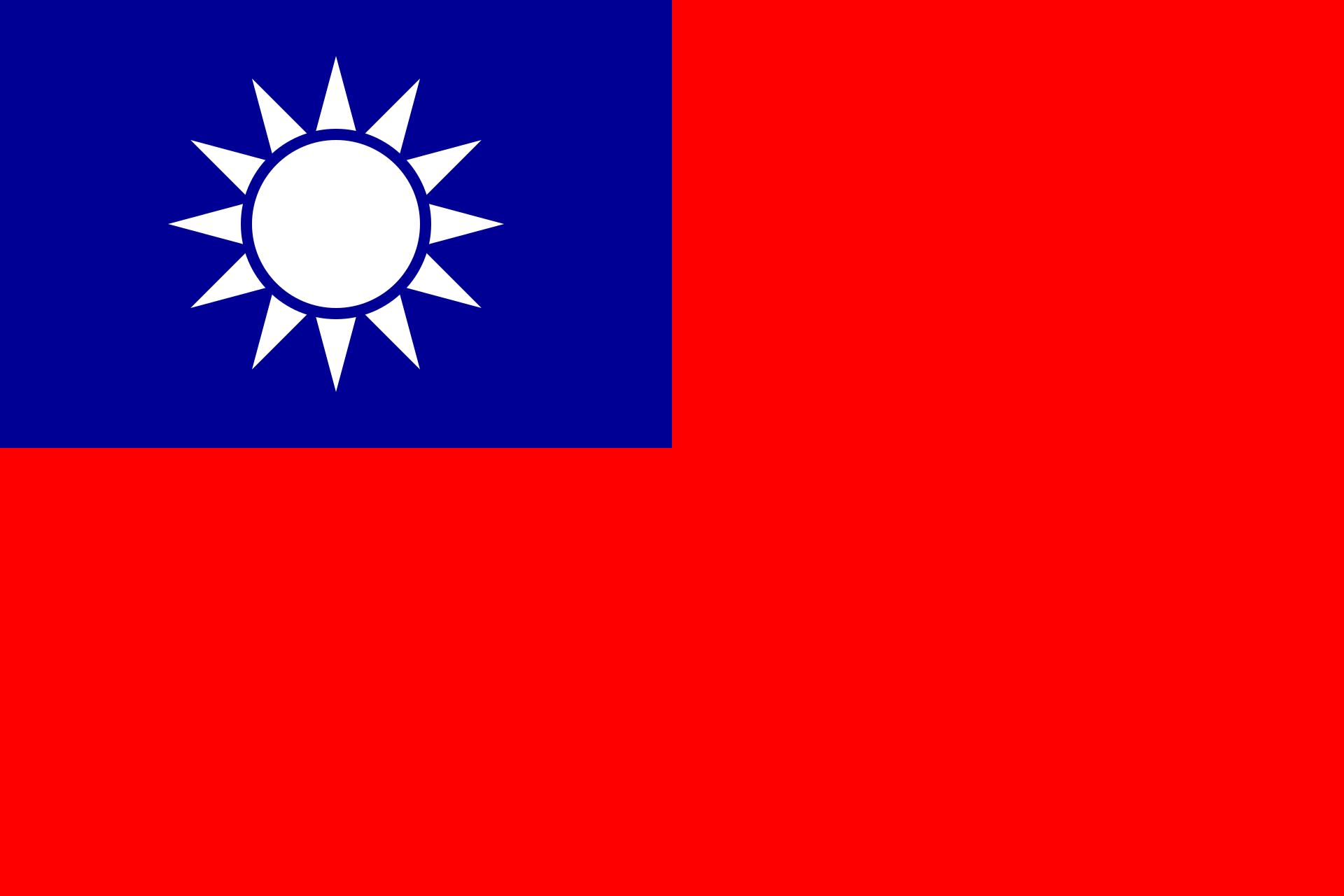
Flag (Flag of Taiwan)
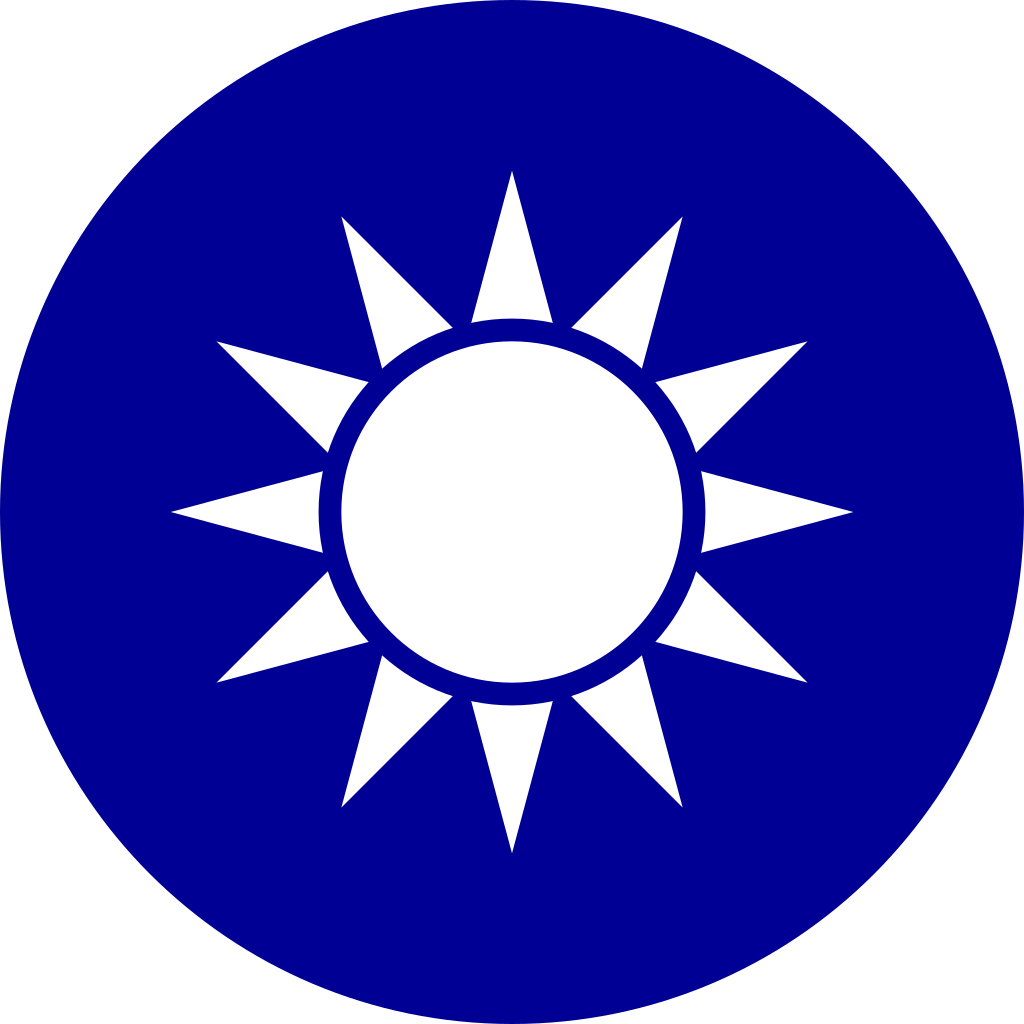
Emblem (National Emblem)
🎵 Anthem (Instrumental)
🎤 Anthem (Vocal)
The Three Principles of the People, our aim shall be:
To found a free land, world peace, be our stand.
Lead on, comrades, vanguards ye are.
Hold fast your aim, by sun and star.
Be earnest and brave, your country to save,
One heart, one soul, one mind, one goal.
三民主義,吾黨所宗,以建民國,以進大同,咨爾多士,為民前鋒,夙夜匪懈,主義是從,矢勤矢勇,必信必忠,一心一德,貫徹始終。
Taiwan
Report ErrorIntroduction
About the National Anthem
Three Principles of the People-'National Anthem of the Republic of China'-National Anthem of the Republic of China
There are 4 versions of the national anthem of the Republic of China since the founding of the People’s Republic of China in 1912; the current version is scheduled for 1937, and because the first sentence of the lyrics is 'Three People's Principles', it is sometimes called the 'Three People's Principles Song'. It is different from the previous national anthem of the Republic of China. This song has words first and then tunes. The lyrics are also known as 'Huangpu Military Academy Motto' or 'Prime Minister Motto', which was held by Sun Yat-sen in the Army Officer School (Whampoa) on June 16, 1924. Military academy) at the opening ceremony of the school's teachers and students; at the end of 1928, the Chinese Kuomintang, which had unified the country through the Northern Expedition of the National Revolutionary Army, decided to make the premier's precepts a party song and solicited music scores. The final work was by Cheng Maoyun Elected. The National Government decided to use this song when it decided on the national anthem in 1930; after soliciting for creation from the outside world, but they were all designated as 'Cong Que', this song was formally designated as the national anthem in 1937, and the Republic of China government moved to Taiwan in 1949 Later, it was only used in Taiwan, Penghu, Jinma and Matsu until today.
There are 4 versions of the national anthem of the Republic of China since the founding of the People’s Republic of China in 1912; the current version is scheduled for 1937, and because the first sentence of the lyrics is 'Three People's Principles', it is sometimes called the 'Three People's Principles Song'. It is different from the previous national anthem of the Republic of China. This song has words first and then tunes. The lyrics are also known as 'Huangpu Military Academy Motto' or 'Prime Minister Motto', which was held by Sun Yat-sen in the Army Officer School (Whampoa) on June 16, 1924. Military academy) at the opening ceremony of the school's teachers and students; at the end of 1928, the Chinese Kuomintang, which had unified the country through the Northern Expedition of the National Revolutionary Army, decided to make the premier's precepts a party song and solicited music scores. The final work was by Cheng Maoyun Elected. The National Government decided to use this song when it decided on the national anthem in 1930; after soliciting for creation from the outside world, but they were all designated as 'Cong Que', this song was formally designated as the national anthem in 1937, and the Republic of China government moved to Taiwan in 1949 Later, it was only used in Taiwan, Penghu, Jinma and Matsu until today.
Flag Meaning
The ratio is 2:3. The red background, the upper left corner is the white flag on the blue background. Red represents the spirit of revolutionary sacrifice and dedication; blue Represents the upright, lofty and great personality and ambition of the Chinese nation; day represents the bright and honest, selfless heart and thoughts, the twelve rays of light represent the twelve hours and the four dimensions and eight virtues, and it is also democratic, free, brilliant, and revolutionary for the people The symbolic symbol of the forward. The blue, white, and red colors represent nationalism, civil rights, and people’s livelihood in the Three Principles of the People, as well as freedom, equality, and fraternity.
Emblem Meaning
China The national emblem of the Republic of China is the symbol and sign of the sovereignty of the Republic of China. It was made based on the blue sky and white flag designed by Lu Haodong. National 17 years) was determined as the national emblem by the 'Republic of China National Emblem and National Flag Law'.
In 1924 (the thirteenth year of the Republic of China), He Yingqin, who was the chief instructor of the Whampoa Military Academy (now the Army Academy), designed the school flag for the school. The light does not touch the edge. This pattern was adopted by the then principal Jiang Zhongzheng.
In 1928 (the seventeenth year of the Republic of China), the National Government enacted the 'Republic of China National Emblem and National Flag Law'. The blue sky and white sun symbol on the Whampoa Military Academy became the national emblem, and the school flag itself became the national government chairman flag after revision, which is still used as today’s China The flag of the commander-in-chief of the Republic of China.
Blue sky and white sun is the revolutionary symbol designed by revolutionary martyr Lu Haodong. The blue sky and white sun is a magnificent image. The Republic of China is the country of the Far East, and the sunrise is the best in the East. The blue sky and white sun show the righteousness of freedom and equality.
Cyan represents brightness and purity, nation and freedom; white represents selflessness, civil rights and equality.
The sharp rays of light in the daytime indicate that the revolution is advancing. The twelve rays of light represent twelve hours in a day and twelve months in a year. It also inspires people to work hard and keep pace with the times and strive for self-improvement. They also symbolize son, ugliness, yin, mao, chen, 巳, The twelve earthly branches of Wu, Wei, Shen, You, Xu, and Hai also symbolize the lifeblood of the country, which will last forever in the world as time advances.
The blue sky is greater than the light of the day, which symbolizes the vastness of the blue sky in the sky. The sun in the blue sky is far and far away. It has ancestors and historical meaning. It represents the entire Republic of China. Don’t forget the sacrifices and contributions of the sages and martyrs in history to democracy.
Differences from the Chinese Kuomintang Party Emblem
The theme of the Blue Sky and White Sun Flag 'Blue Sky and White Sun' is also used in the national emblem of the Republic of China and the emblem of the Chinese Kuomintang. The difference lies in the smaller shape of the 'white sun' in the national emblem, while the blue sky and white sun of the Kuomintang party emblem are connected to the edge. The twelve lights of the party emblem directly touch the outer ring, but the national emblem is more restrained and does not touch the periphery.
In meaning, the blue sky in the national emblem is greater than the rays of the sun, which symbolizes the vastness of the sky in the sky and the lofty sky in the sky. It has ancestors and historical meanings. It represents the entire Republic of China. Don’t forget the sacrifices and contributions of the historical sages and martyrs to the people. . In the emblem of the Chinese Kuomintang, the vast number of days represents the revolutionary spirit of the sages and comrades of the Chinese Kuomintang. It is as strong as the sun, and the revolutionary attitude would rather die than surrender.
In 1924 (the thirteenth year of the Republic of China), He Yingqin, who was the chief instructor of the Whampoa Military Academy (now the Army Academy), designed the school flag for the school. The light does not touch the edge. This pattern was adopted by the then principal Jiang Zhongzheng.
In 1928 (the seventeenth year of the Republic of China), the National Government enacted the 'Republic of China National Emblem and National Flag Law'. The blue sky and white sun symbol on the Whampoa Military Academy became the national emblem, and the school flag itself became the national government chairman flag after revision, which is still used as today’s China The flag of the commander-in-chief of the Republic of China.
Blue sky and white sun is the revolutionary symbol designed by revolutionary martyr Lu Haodong. The blue sky and white sun is a magnificent image. The Republic of China is the country of the Far East, and the sunrise is the best in the East. The blue sky and white sun show the righteousness of freedom and equality.
Cyan represents brightness and purity, nation and freedom; white represents selflessness, civil rights and equality.
The sharp rays of light in the daytime indicate that the revolution is advancing. The twelve rays of light represent twelve hours in a day and twelve months in a year. It also inspires people to work hard and keep pace with the times and strive for self-improvement. They also symbolize son, ugliness, yin, mao, chen, 巳, The twelve earthly branches of Wu, Wei, Shen, You, Xu, and Hai also symbolize the lifeblood of the country, which will last forever in the world as time advances.
The blue sky is greater than the light of the day, which symbolizes the vastness of the blue sky in the sky. The sun in the blue sky is far and far away. It has ancestors and historical meaning. It represents the entire Republic of China. Don’t forget the sacrifices and contributions of the sages and martyrs in history to democracy.
Differences from the Chinese Kuomintang Party Emblem
The theme of the Blue Sky and White Sun Flag 'Blue Sky and White Sun' is also used in the national emblem of the Republic of China and the emblem of the Chinese Kuomintang. The difference lies in the smaller shape of the 'white sun' in the national emblem, while the blue sky and white sun of the Kuomintang party emblem are connected to the edge. The twelve lights of the party emblem directly touch the outer ring, but the national emblem is more restrained and does not touch the periphery.
In meaning, the blue sky in the national emblem is greater than the rays of the sun, which symbolizes the vastness of the sky in the sky and the lofty sky in the sky. It has ancestors and historical meanings. It represents the entire Republic of China. Don’t forget the sacrifices and contributions of the historical sages and martyrs to the people. . In the emblem of the Chinese Kuomintang, the vast number of days represents the revolutionary spirit of the sages and comrades of the Chinese Kuomintang. It is as strong as the sun, and the revolutionary attitude would rather die than surrender.
🔗 External Resources & Travel Guide
- 📖 Wikipedia: Taiwan - History, politics, and geography
- 📊 CIA World Factbook: Taiwan - Official government statistics & maps
- ✈️ Wikivoyage: Taiwan - Travel guide, attractions, and transport