Eastern Republic of Uruguay, commonly known as Uruguay, a country in southeastern South America, bordering Argentina to the west, Brazil to the east and north It borders the La Plata River in the south and the Atlantic Ocean in the southeast. Uruguay has a population of 3.42 million, of which nearly 1.8 million live in its capital and largest city, Montevideo and its metropolitan area. Uruguay has an area of 176,000 square meters (68,000 square miles), It is the second smallest in South America, only larger than Suriname.
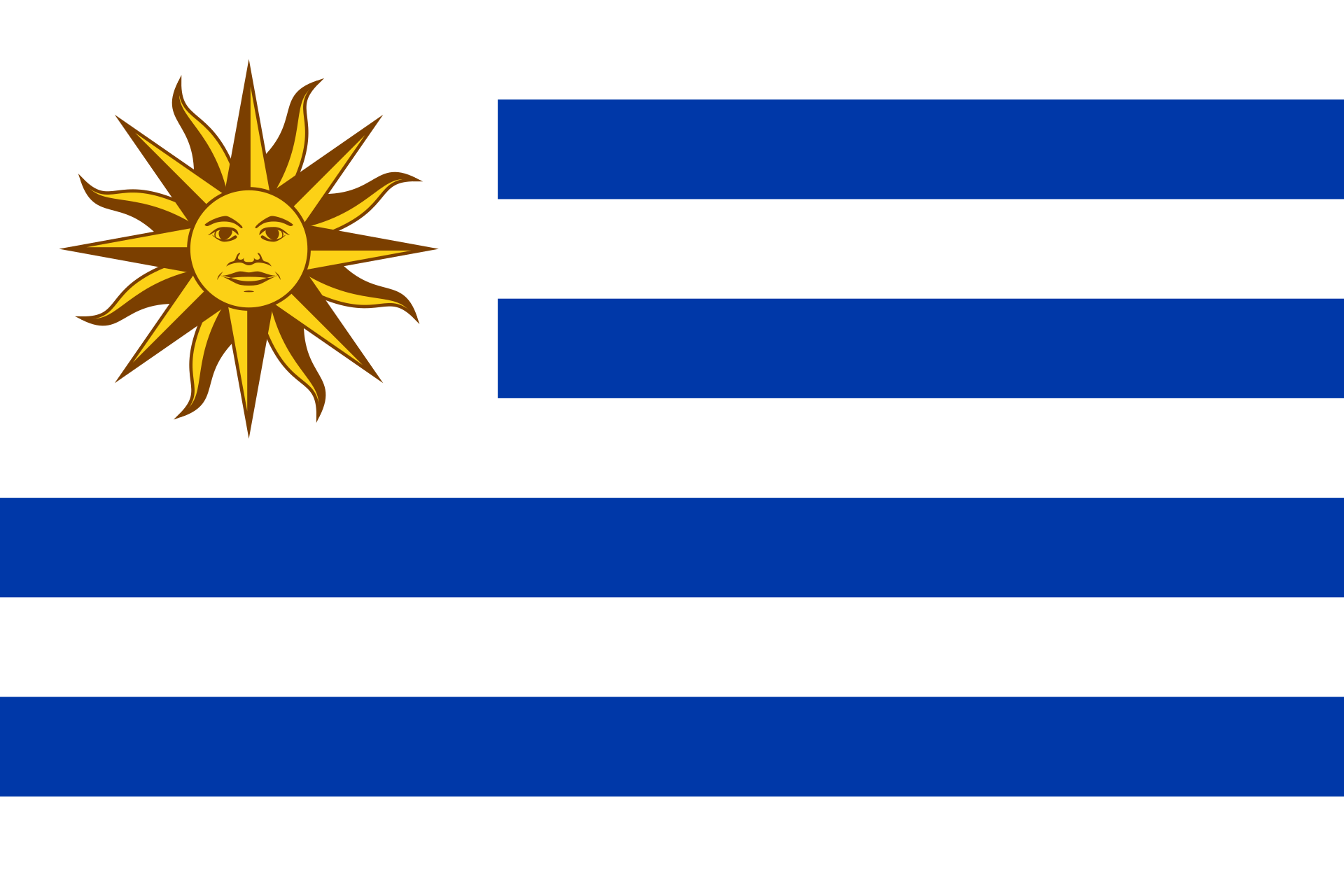
Flag (Flag of Uruguay)
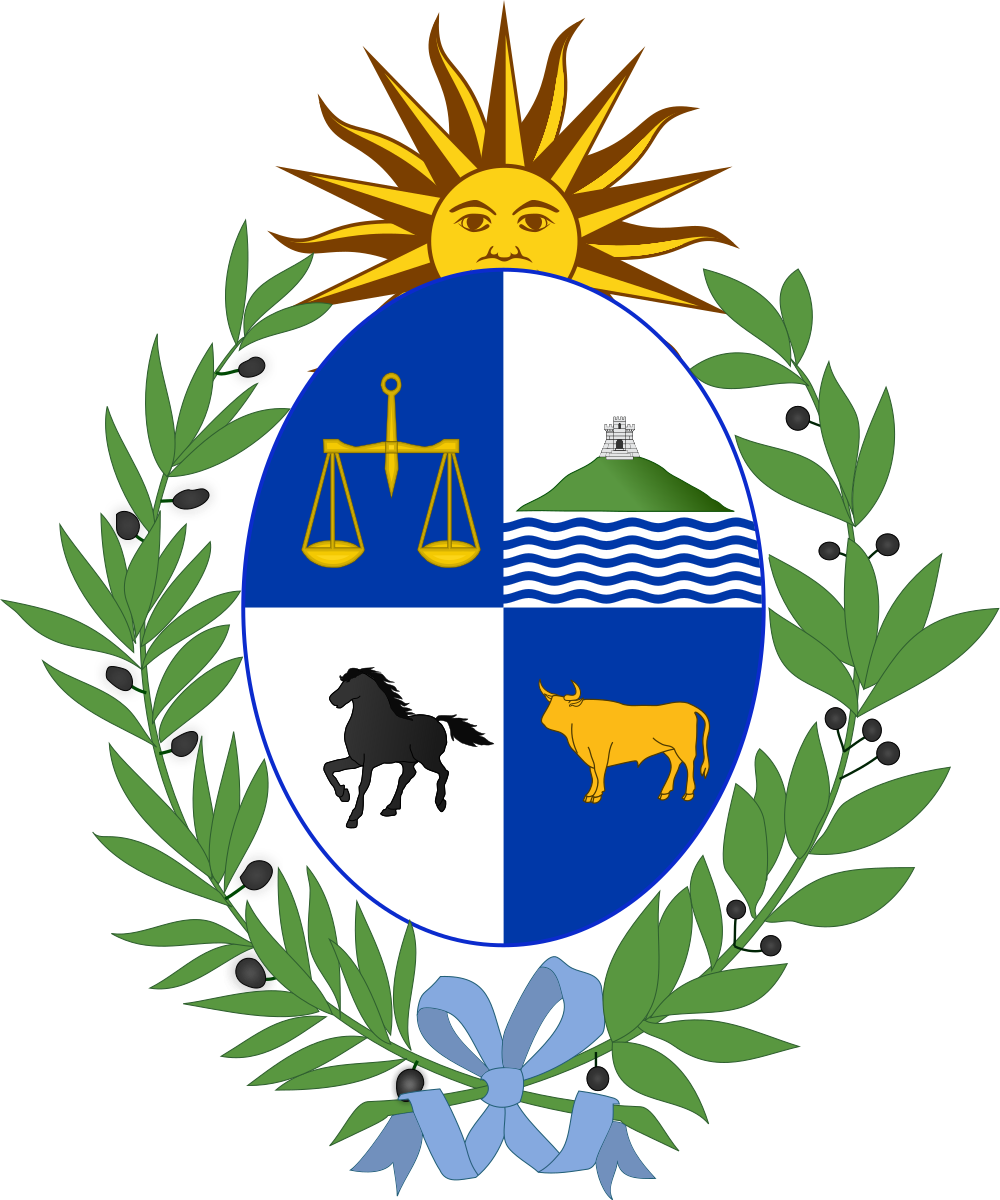
Emblem (National Emblem)
🎵 Anthem (Instrumental)
🎤 Anthem (Vocal)
Orientals, our country or the grave!
Liberty or with glory we die!
Orientals, our country or the grave!
Liberty or with glory we die!
It is the vow that the soul pronounces,
And which heroically we will fulfill.
It is the vow that the soul pronounces,
And which heroically we will fulfill.
Liberty, liberty, Orientals!
This cry saved the fatherland.
This cry saved the fatherland.
Orientales, la Patria o la tumba!
¡Libertad o con gloria morir!
Orientales, la Patria o la tumba!
¡Libertad o con gloria morir!
Es el voto que el alma pronuncia,
Y que heroicos sabremos cumplir.
¡Libertad, libertad, orientales!
Ese grito a la Patria salvó.
Uruguay
Report ErrorIntroduction
About the National Anthem
National Anthem-'Uruguayan National Anthem'-Orientales, la Patria o la tumba
'Uruguayan National Anthem' is The longest national anthem has 105 bars of music, although in most cases an abridged version is played, because the first sentence of its lyrics is also called 'East Coaster, no motherland or death'.
'Uruguayan National Anthem' is The longest national anthem has 105 bars of music, although in most cases an abridged version is played, because the first sentence of its lyrics is also called 'East Coaster, no motherland or death'.
Flag Meaning
The ratio is 2:3. Nine white and blue horizontal flags, with the May sun symbol in the upper left corner of the white. Blue symbolizes freedom, white symbolizes peace, and the nine stripes of blue and white represent Uruguay’s nine stripes. Regions. The golden sun in the upper left corner emits eight ray angles and eight wavy rays, safeguarding the sovereignty and independence of the country.
Emblem Meaning
The National Emblem of Uruguay was inaugurated on March 19, 1829. It is a shield emblem, in an oval shape, divided into four quadrants:
Upper left corner-blue ground, painted with scales symbolizing equality and justice
Upper right corner-white ground, painted with Montevideo mountain and mountain The fortress
lower left corner-white ground, painted with horses symbolizing freedom
lower right corner-blue ground, painted with bulls symbolizing prosperity
decorated with laurels and olive branches. The top of the national emblem commemorates the May Revolution, a symbol The rise of the 'May Sun' in the country.
Upper left corner-blue ground, painted with scales symbolizing equality and justice
Upper right corner-white ground, painted with Montevideo mountain and mountain The fortress
lower left corner-white ground, painted with horses symbolizing freedom
lower right corner-blue ground, painted with bulls symbolizing prosperity
decorated with laurels and olive branches. The top of the national emblem commemorates the May Revolution, a symbol The rise of the 'May Sun' in the country.
🔗 External Resources & Travel Guide
- 📖 Wikipedia: Uruguay - History, politics, and geography
- 📊 CIA World Factbook: Uruguay - Official government statistics & maps
- ✈️ Wikivoyage: Uruguay - Travel guide, attractions, and transport