Vatican City State, commonly known as Vatican City or Vatican City, has been translated as Vatican City, is the highest by the Catholic Church Authority-the landlocked city-state directly ruled by the Holy See (China) is the smallest country in the world. Its territory is located in the northwest corner of Rome, the capital of Italy. It is also the residence of the Pope, the highest leader of the Catholic Church, and one-sixth of the world. A center of faith for the population. Its predecessor was the Pope State. It has been recognized as a sovereign state by the Latran Treaty since 1929 and implemented a political system that combines politics and religion. The buildings in the city were recognized by UNESCO in 1984 World cultural heritage.
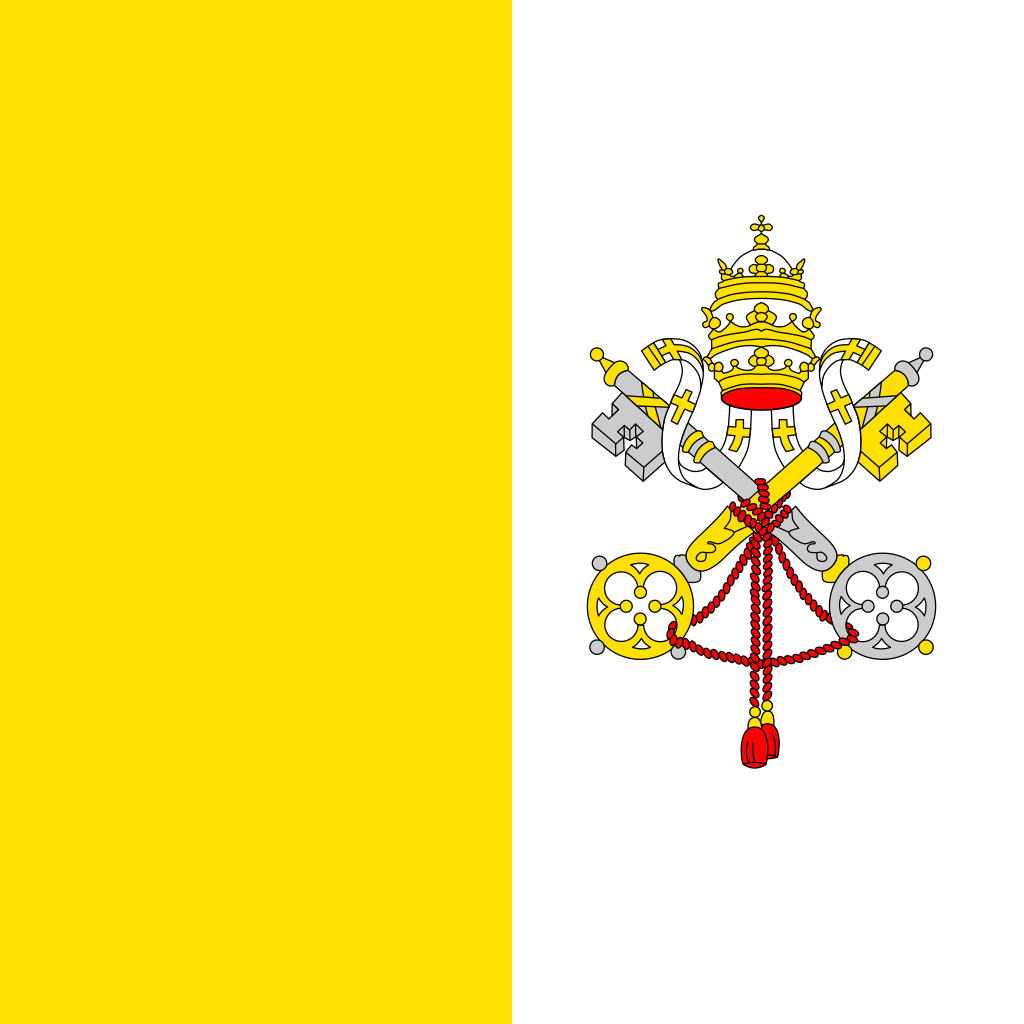
Flag (Flag of Vatican)
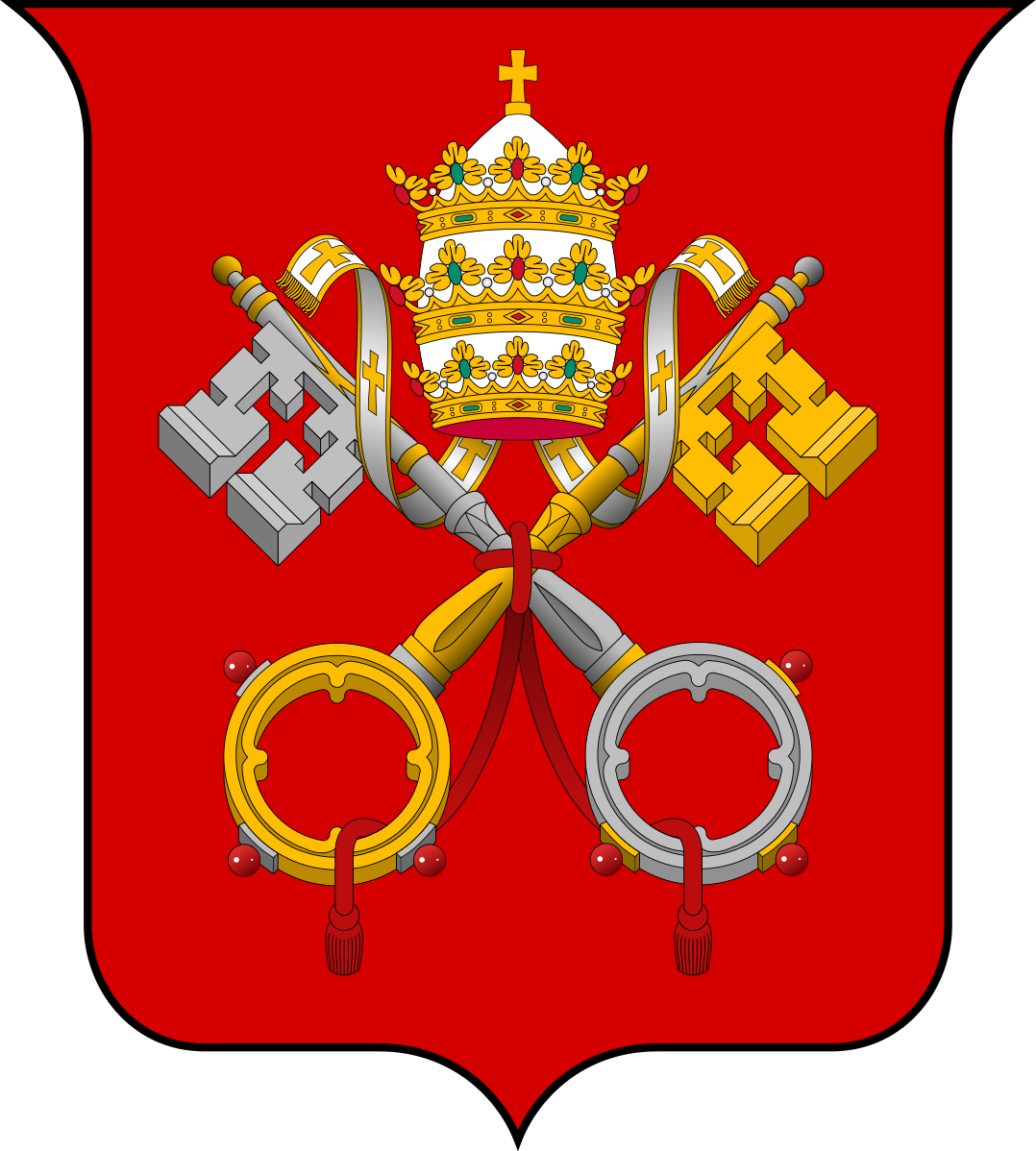
Emblem (National Emblem)
🎵 Anthem (Instrumental)
🎤 Anthem (Vocal)
O Rome immortal, city of martyrs and saints,
O immortal Rome, accept our praises.
Glory to God in the highest,
And peace on earth to men of good will.
O felix Roma, O Roma nobilis
Sedes es Petri, qui Romae effudit sanguinem
Principem Apostolorum glorificavit Deus
O felix Roma, O Roma nobilis
Vatican
Report ErrorIntroduction
About the National Anthem
'Pope's March'-Inno e Marcia Pontificale
'Pope's March' is the national anthem of the Vatican City State and the official march of the Pope. It was written by Charles Cournot in 1869. The song was officially established as the Vatican National Anthem in 1949. It is usually attended by the Pope and one of his representatives (such as the Ambassador of the Holy See) at solemn occasions or important ceremonies, and the rise of the Vatican It is played during the flag-raising ceremony. In the flag-raising ceremony, only the eighth bar of this song is generally played.
On October 16, 1949, Pope Pius XII officially recognized this song as a new Pontifical and Vatican Ode, replacing it Since the establishment of the Vatican City State in 1929, the 'March of Triumph', composed and used by Austrian composer Victorin Holmeyer, has the status of apostolic and Vatican ode. The Pope’s March composed by Charles Gounod is the first It was performed as the 'National Anthem' on Christmas Eve in 1949, the day before the 'Holy Year' in 1950. As a respect for the old national anthem, Holmeyer's Triumphal March was also performed for the last time on that day. br>Antoine Allegra, one of the organists in the Basilica of St. Peter at the time, filled in Italian lyrics for the music composed by Charles Cournot[4]. Lyrics in other languages were also filled out by several lyricists one after another [4]. Unlike the Italian version, the lyrics of some languages are not directly related to the pope. For example, the Cebuano lyrics 'Yutang Tabonon' (beloved by Rudy Villanueva) is written by Rudy Villanueva. Land), which means 'defend the Philippine motherland.”
In 1991, Savona’s lyricist Raffaello Lavagna wrote this song for a four-part chorus (by Alberico Vitalini) The Latin lyrics used
Although the Pope’s March has always been regarded as the official national anthem of the Vatican, the Vatican government emphasized that the song 'should not be understood as the national anthem” but 'a combination of text and music. , Touching the inner works of many people from all over the world who are admiring the Holy See in Rome' (a composition w hose words and music speak to the heart of many throughout the world who see in Rome the See of Peter)[1].
'Pope's March' is the national anthem of the Vatican City State and the official march of the Pope. It was written by Charles Cournot in 1869. The song was officially established as the Vatican National Anthem in 1949. It is usually attended by the Pope and one of his representatives (such as the Ambassador of the Holy See) at solemn occasions or important ceremonies, and the rise of the Vatican It is played during the flag-raising ceremony. In the flag-raising ceremony, only the eighth bar of this song is generally played.
On October 16, 1949, Pope Pius XII officially recognized this song as a new Pontifical and Vatican Ode, replacing it Since the establishment of the Vatican City State in 1929, the 'March of Triumph', composed and used by Austrian composer Victorin Holmeyer, has the status of apostolic and Vatican ode. The Pope’s March composed by Charles Gounod is the first It was performed as the 'National Anthem' on Christmas Eve in 1949, the day before the 'Holy Year' in 1950. As a respect for the old national anthem, Holmeyer's Triumphal March was also performed for the last time on that day. br>Antoine Allegra, one of the organists in the Basilica of St. Peter at the time, filled in Italian lyrics for the music composed by Charles Cournot[4]. Lyrics in other languages were also filled out by several lyricists one after another [4]. Unlike the Italian version, the lyrics of some languages are not directly related to the pope. For example, the Cebuano lyrics 'Yutang Tabonon' (beloved by Rudy Villanueva) is written by Rudy Villanueva. Land), which means 'defend the Philippine motherland.”
In 1991, Savona’s lyricist Raffaello Lavagna wrote this song for a four-part chorus (by Alberico Vitalini) The Latin lyrics used
Although the Pope’s March has always been regarded as the official national anthem of the Vatican, the Vatican government emphasized that the song 'should not be understood as the national anthem” but 'a combination of text and music. , Touching the inner works of many people from all over the world who are admiring the Holy See in Rome' (a composition w hose words and music speak to the heart of many throughout the world who see in Rome the See of Peter)[1].
Flag Meaning
The ratio is 1:1. Two vertical yellow and white flags. The 3 key cross diagram represents the Pope. The two colors of yellow and white are derived from the cap badge of the Vatican, and also represent the two keys of Peter. The triple crown in the imperial emblem represents the Pope as the representative of Christ in the world and the lord of the Vatican City State, as well as executive power, legislative power, and judicial power. The two keys represent the two keys given to Peter by Christ. They are derived from the 'Gospel of Matthew': 'I will give you the key to the kingdom of heaven. Whatever you bind on the earth will be bound in heaven; wherever you are on earth What is released will also be released in heaven.'
Emblem Meaning
The Vatican National Emblem is a red coat of arms with two crossed St. Peter’s keys and a pope. The triple crown.
🔗 External Resources & Travel Guide
- 📖 Wikipedia: Vatican - History, politics, and geography
- 📊 CIA World Factbook: Vatican - Official government statistics & maps
- ✈️ Wikivoyage: Vatican - Travel guide, attractions, and transport