The Plurinational State of Bolivia, commonly known as Bolivia, is a landlocked country in South America and a member of the Association of South American Nations Countries. The neighboring countries are Brazil, Peru, Chile, Argentina, and Paraguay. The legal capital is Sucre, but the actual seat of government is La Paz. La Paz has an altitude of over 3,600, making it the highest capital in the world.
< h5>[National Anthem]National Anthem of Bolivia-'National Anthem of Bolivia'-Himno Nacional del Estado Plurinacional de Bolivia
'National Anthem of Bolivia' is the national anthem of Bolivia. The song adopts In 1851, the composer was José Ignacio de Sanjinés Barriga, and the composer was Leopoldo Benedetto Vincenti (Leopoldo Benedetto Vincenti)
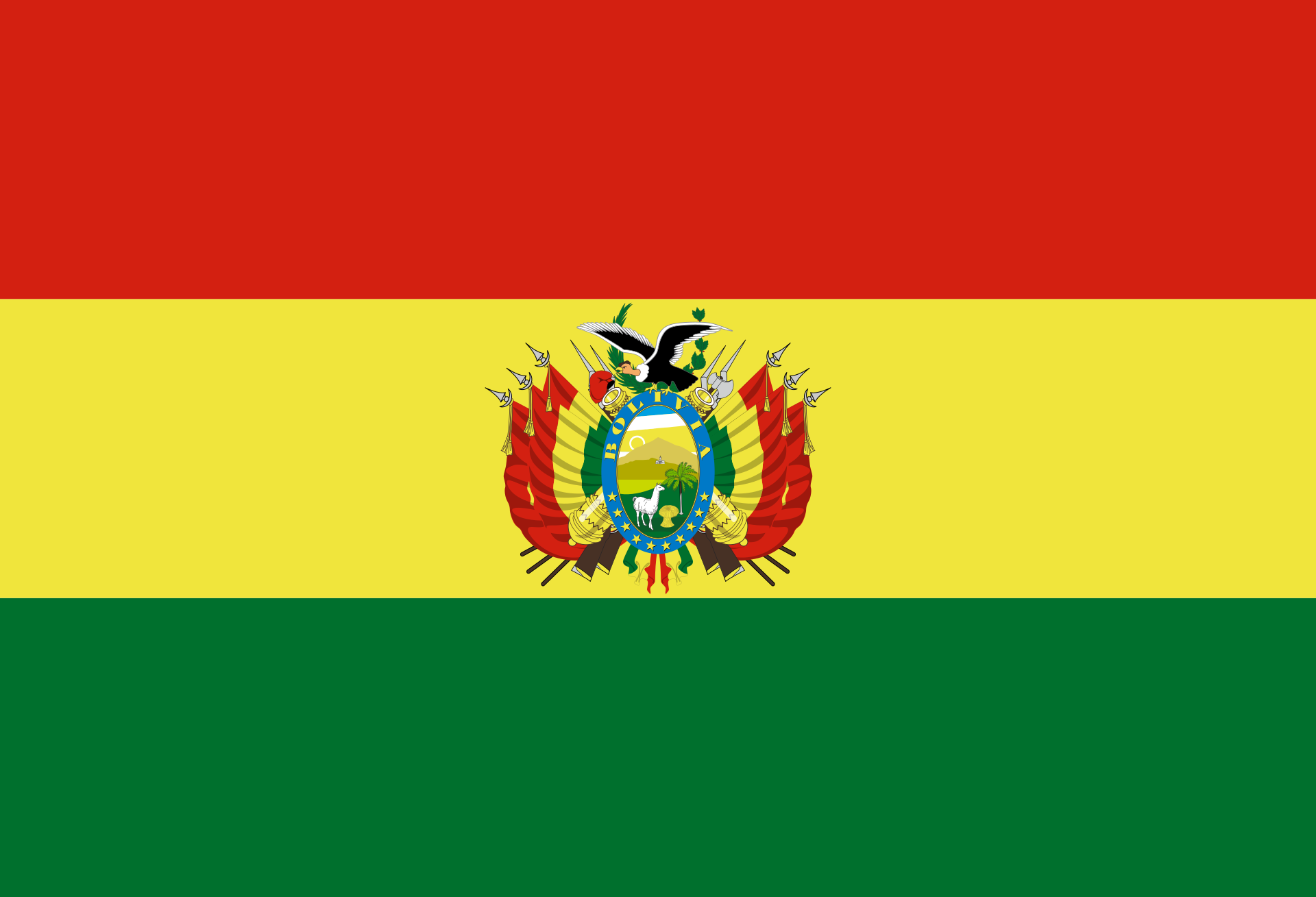
Flag (Flag of Bolivia)
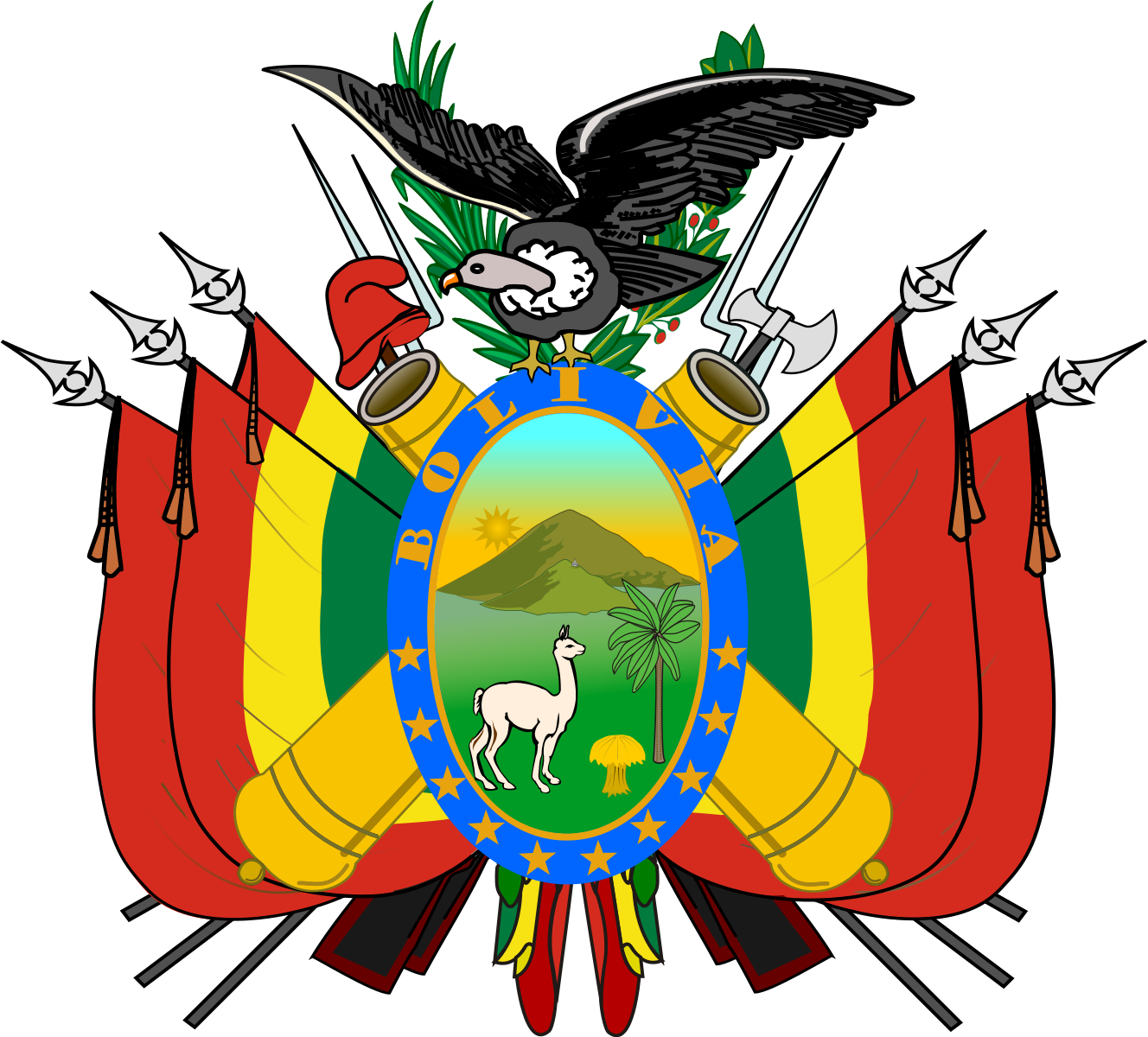
Emblem (National Emblem)
🎵 Anthem (Instrumental)
🎤 Anthem (Vocal)
Bolivians: a most favorable destiny
Has crowned our vows and longings;
This land is free,
Your servile state has ended.
The martial din that yesterday
Was heard, and the terrifying war cry,
Are followed today, in harmonious contrast,
By sweet hymns of peace and unity.
Eternal praise to the brave warriors
Whose heroic valor and firmness
Conquered the glories that now
A happy Bolivia begins to enjoy!
Let their names, in marble and in bronze,
Transmit to remote ages
And in resounding song repeat the call:
Freedom! Freedom! Freedom!
Here this innocent and beautiful land,
Which owes its name to Bolívar,
Is the happy homeland where man
Enjoys the blessings of happiness and peace.
If a foreign power some day
Attempts to subjugate Bolivia,
Let it prepare for a fatal destiny
Which threatens the haughty aggressor.
That the sons of the great Bolívar
Have sworn a thousand and a thousand times:
To die rather than live as slaves!
To die rather than live as slaves!
Bolivianos: el hado propicio
Coronó nuestros votos y anhelo;
Es ya libre, ya libre este suelo,
Ya cesó su servil condición.
Al estruendo marcial que ayer fuera
Y al clamor de la guerra horroroso,
Siguen hoy, en contraste armonioso,
Dulces himnos de paz y de unión.
Loor eterno a los bravos guerreros,
Cuyo heroico valor y firmeza,
Conquistaron las glorias que empieza
Hoy Bolivia feliz a gozar.
Que sus nombres, en mármol y en bronce,
A remotas edades transmitan,
Y en sonoros cantares repitan:
¡Libertad, Libertad, Libertad!
Esta tierra inocente y hermosa
Que ha debido a Bolívar su nombre
Es la patria feliz donde el hombre
Goza el bien de la dicha y la paz.
Si extranjero poder algún día
Sojuzgar a Bolivia intentare,
Al destino fatal se prepare
Que amenaza a soberbio agresor.
Que los hijos del grande Bolívar
Han ya mil y mil veces jurado:
Morir antes que esclavos vivir.
Bolivia
Report ErrorIntroduction
About the National Anthem
(Details not available yet)
Flag Meaning
The ratio is 15:22. Red, yellow and green three horizontal flags. Red symbolizes the brave spirit of the people of Bolivia, yellow symbolizes minerals, and green symbolizes plants and agriculture.
Emblem Meaning
The 2009 Constitution stipulates that the Inca emblem and coat of arms are both the national symbol of Bolivia. The central pattern of the Bolivian epaulettes is an oval coat of arms, painted with mountains and mine entrances, with the sun behind the mountains. There are alpacas on the plains , Wheat and trees. The outer ring book has the name of the country, and there are ten stars below, representing the nine existing provinces and the only coastal province in Bolivia that was lost in the war with Chile in 1879. Later, the national flag, artillery, and rifle , Axe and cap of freedom. Above the oval are laurel and olive branches, and the Andean condor in flapping wings.
🔗 External Resources & Travel Guide
- 📖 Wikipedia: Bolivia - History, politics, and geography
- 📊 CIA World Factbook: Bolivia - Official government statistics & maps
- ✈️ Wikivoyage: Bolivia - Travel guide, attractions, and transport