The People’s Republic of China, referred to as China, is a socialist country in eastern Asia led by the Communist Party of China, founded in October 1949 The capital is Beijing on the 1st. The People’s Republic of China has an estimated land area of about 9.6 million square kilometers, making it the third largest country in the world by land area. It is divided into 23 provinces, 5 autonomous regions, 4 municipalities and 2 special municipalities. Administrative area. The terrain of the People’s Republic of China is high in the west and low in the east, presenting a three-tiered distribution. Most of the regions have a temperate and subtropical monsoon climate. The geographical scenery and climate patterns are rich and diverse, including glaciers, Danxia, loess, deserts, karsts and other landforms. There are dry grasslands and deserts in the north of the People’s Republic of China, tropical rain forests in the south, and Tianshan Mountains, Pamirs, Qinghai-Tibet Plateau, Karakoram and Himalayas from west to southwest, and the Pacific Ocean to the east. The territorial sea is the Bohai Sea (inland sea) It is composed of the Yellow Sea, the East China Sea and the South China Sea, with a water area of about 4.7 million square kilometers and 7600 large and small islands. The territory of the People’s Republic of China extends to the middle of Heixiazi Island in Fuyuan City, Jiamusi City, Heilongjiang Province in the east and Xinjiang in the west. The Pamirs in the territory, north to Mohe County in the Daxinganling region of Heilongjiang Province, south to Zengmu Ansha in the South China Sea.
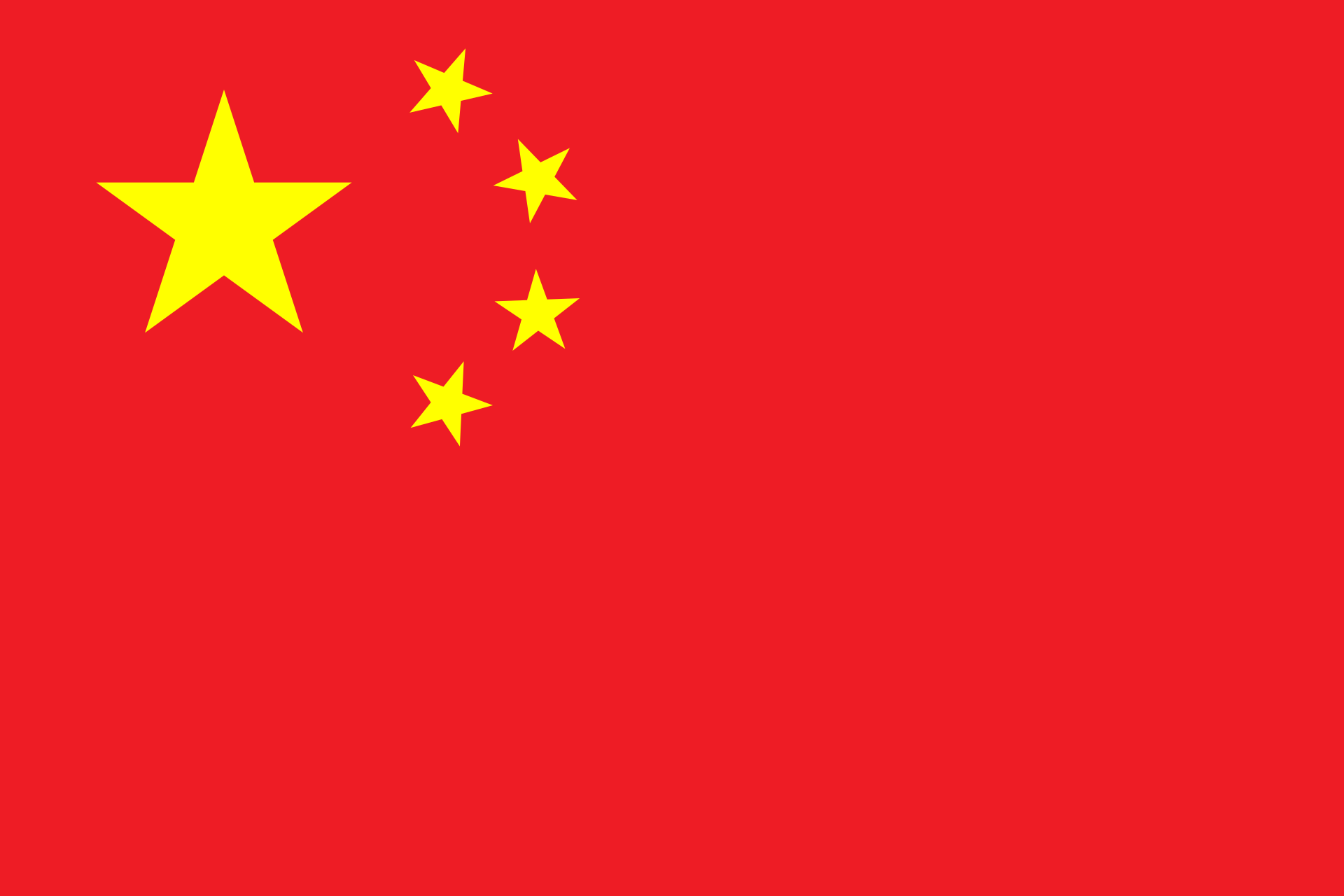
Flag (Flag of China)
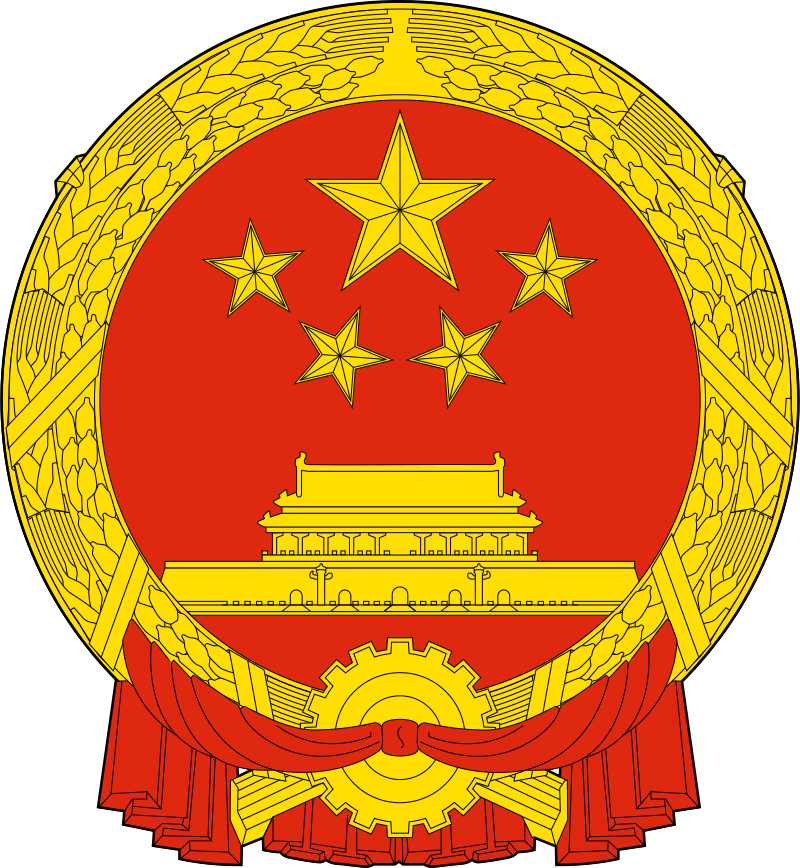
Emblem (National Emblem)
🎵 Anthem (Instrumental)
🎤 Anthem (Vocal)
Arise! Ye who refuse to be slaves!
With our flesh and blood, let us build our new Great Wall!
As the Chinese nation faces its greatest peril,
All forcefully emit their last roar.
Arise! Arise! Arise!
Our million hearts beat as one,
Brave the enemy's gunfire, March on!
Brave the enemy's gunfire, March on!
March on! March on! On!
起来!不愿做奴隶的人们!
把我们的血肉,筑成我们新的长城!
中华民族到了最危险的时候,
每个人被迫着发出最后的吼声。
起来!起来!起来!
我们万众一心,
冒着敌人的炮火,前进!
冒着敌人的炮火,前进!
前进!前进!进!
China
Report ErrorIntroduction
About the National Anthem
March of the Volunteers-March of the Volunteers-Yìyǒngjūn Jìnxíngqǔ
'The March of the Volunteers' is the theme song of the 1935 movie 'Children of the Wind and Clouds' and the national anthem of the People's Republic of China. In 1935, the song was composed by Tian Han and Nie Er. In fact, Nie Er only wrote a simple piece The main melody score of the accompaniment was orchestrated by He Luting’s band conductor of Shanghai EMI Records and Russian-Jewish composer Aaron Avshalomov. The song soon became the theme song of the Republic of China movie 'Children of the Wind' and was received by the United States The black singer Paul Robertson sang a cover to support the Chinese people’s war of resistance against Japan. At present, when various bands perform this piece and accompany the chorus, most of them follow the orchestral score written by Li Huanzhi for this piece and finalized in 1953. This piece The song has been very popular during the War of Resistance Against Japan. It was once designated as the military song of the 200th Division of the Fifth Army of the National Revolutionary Army of the Republic of China under General Dai Anlan's commander. On September 27, 1949, the first session of the Chinese People's Political Consultative Conference The plenary meeting resolution: Before the national anthem of the People’s Republic of China was formally formulated, 'The March of the Volunteers' was adopted as the national anthem. On October 1, the People’s Republic of China was established. After the outbreak of the Cultural Revolution in 1966, Tian Han, the composer of the national anthem, was criticized, 'March of the Volunteers' was once replaced as an unofficial national anthem. Later, the 'March of the Volunteers' still existed in a version without lyrics. By 1978, the 'March of the Volunteers', which was collectively written during the Cultural Revolution, was officially adopted as the national anthem of the People's Republic of China. 1982 In ‧ the National People’s Congress passed a resolution to withdraw The new words of 1978 were sold, and 'The March of the Volunteers' composed by Tian Han and Nie Er was restored as the national anthem of the People's Republic of China. The constitutional amendment passed on March 14, 2004 stipulates that the national anthem of the People's Republic of China shall be the March of Volunteers. According to the online voting results of the 'My Top Ten Favorite Songs of the War of Resistance Against Japan' released by the State Administration of Press, Publication, Radio, Film and Television on August 26, 2015, 'The March of Volunteers' was selected into the list of 'My Top Ten Favorite Songs of the War of Resistance', ranking first .
'The March of the Volunteers' is the theme song of the 1935 movie 'Children of the Wind and Clouds' and the national anthem of the People's Republic of China. In 1935, the song was composed by Tian Han and Nie Er. In fact, Nie Er only wrote a simple piece The main melody score of the accompaniment was orchestrated by He Luting’s band conductor of Shanghai EMI Records and Russian-Jewish composer Aaron Avshalomov. The song soon became the theme song of the Republic of China movie 'Children of the Wind' and was received by the United States The black singer Paul Robertson sang a cover to support the Chinese people’s war of resistance against Japan. At present, when various bands perform this piece and accompany the chorus, most of them follow the orchestral score written by Li Huanzhi for this piece and finalized in 1953. This piece The song has been very popular during the War of Resistance Against Japan. It was once designated as the military song of the 200th Division of the Fifth Army of the National Revolutionary Army of the Republic of China under General Dai Anlan's commander. On September 27, 1949, the first session of the Chinese People's Political Consultative Conference The plenary meeting resolution: Before the national anthem of the People’s Republic of China was formally formulated, 'The March of the Volunteers' was adopted as the national anthem. On October 1, the People’s Republic of China was established. After the outbreak of the Cultural Revolution in 1966, Tian Han, the composer of the national anthem, was criticized, 'March of the Volunteers' was once replaced as an unofficial national anthem. Later, the 'March of the Volunteers' still existed in a version without lyrics. By 1978, the 'March of the Volunteers', which was collectively written during the Cultural Revolution, was officially adopted as the national anthem of the People's Republic of China. 1982 In ‧ the National People’s Congress passed a resolution to withdraw The new words of 1978 were sold, and 'The March of the Volunteers' composed by Tian Han and Nie Er was restored as the national anthem of the People's Republic of China. The constitutional amendment passed on March 14, 2004 stipulates that the national anthem of the People's Republic of China shall be the March of Volunteers. According to the online voting results of the 'My Top Ten Favorite Songs of the War of Resistance Against Japan' released by the State Administration of Press, Publication, Radio, Film and Television on August 26, 2015, 'The March of Volunteers' was selected into the list of 'My Top Ten Favorite Songs of the War of Resistance', ranking first .
Flag Meaning
The ratio is 2:3. For the five-star red flag. rectangle. The red flag has five yellow five-pointed stars on the upper left. The one star is larger and is on the left; the four stars are smaller, and the ring is arched to the right of the big star. Each of the four groups of small stars has a point facing the center of the big star. Red symbolizes revolution. Yellow is to show light on the red ground. The five groups of stars and their mutual relations symbolize the unity of the revolutionary people under the leadership of the Communist Party of China. The big five-pointed yellow star represents the Communist Party of China, and the four small five-pointed yellow stars represent the four classes of the Chinese people: the working class, the peasantry, the petty bourgeoisie, and the national bourgeoisie.
Emblem Meaning
The National Emblem of the People's Republic of China is the symbol and sign of the sovereignty of the People's Republic of China. In the middle is Tiananmen Square illuminated by five five-pointed stars, surrounded by ears of corn and gears. The four small five-pointed stars above the Tiananmen Tower surround a large five-pointed star in a semi-arc shape. The gears and the grain ears symbolize the working class and peasantry in China, Tiananmen Square symbolizes the struggle spirit of the Chinese people, and the five stars symbolize the unity of the people across the country under the leadership of the Communist Party of China. Article 137 of the 'Constitution of the People's Republic of China' stipulates: 'The national emblem of the People's Republic of China, with the five-star Tiananmen Square in the middle, surrounded by ears of corn and gears.' The 'Description of the Patterns of the National Emblem of the People's Republic of China' stipulates: 'The National Emblem The content is the national flag, Tiananmen Square, corn ears and gears, the gear center and the red ribbon are intertwined; it symbolizes the new democratic revolutionary struggle of the Chinese people since the 'May 4th Movement' and the working class-led people's democratic dictatorship based on the alliance of workers and peasants The birth of New China.'
🔗 External Resources & Travel Guide
- 📖 Wikipedia: China - History, politics, and geography
- 📊 CIA World Factbook: China - Official government statistics & maps
- ✈️ Wikivoyage: China - Travel guide, attractions, and transport