The Republic of Estonia, commonly known as Estonia, is one of the Baltic countries, and its capital and largest city in the country is Tallinn. Estonia is located in the northeast of Europe Its territory is composed of the mainland and 2222 islands in the Baltic Sea. It faces the Baltic Sea in the west, the Gulf of Finland in the north, Lake Chud in the east, and borders Latvia and Russia to the south and east, with a total area of 45,227 square kilometers. It is a temperate continental Humid climate. The country’s main ethnic group, Estonians, belong to the Baltic Finns. The country is currently a member of the Nordic Council, the European Union, the Eurozone, the Schengen Area, the North Atlantic Treaty Organization, and the Organization for Economic Cooperation and Development. One of the high-income economies.

Flag (Flag of Estonia)
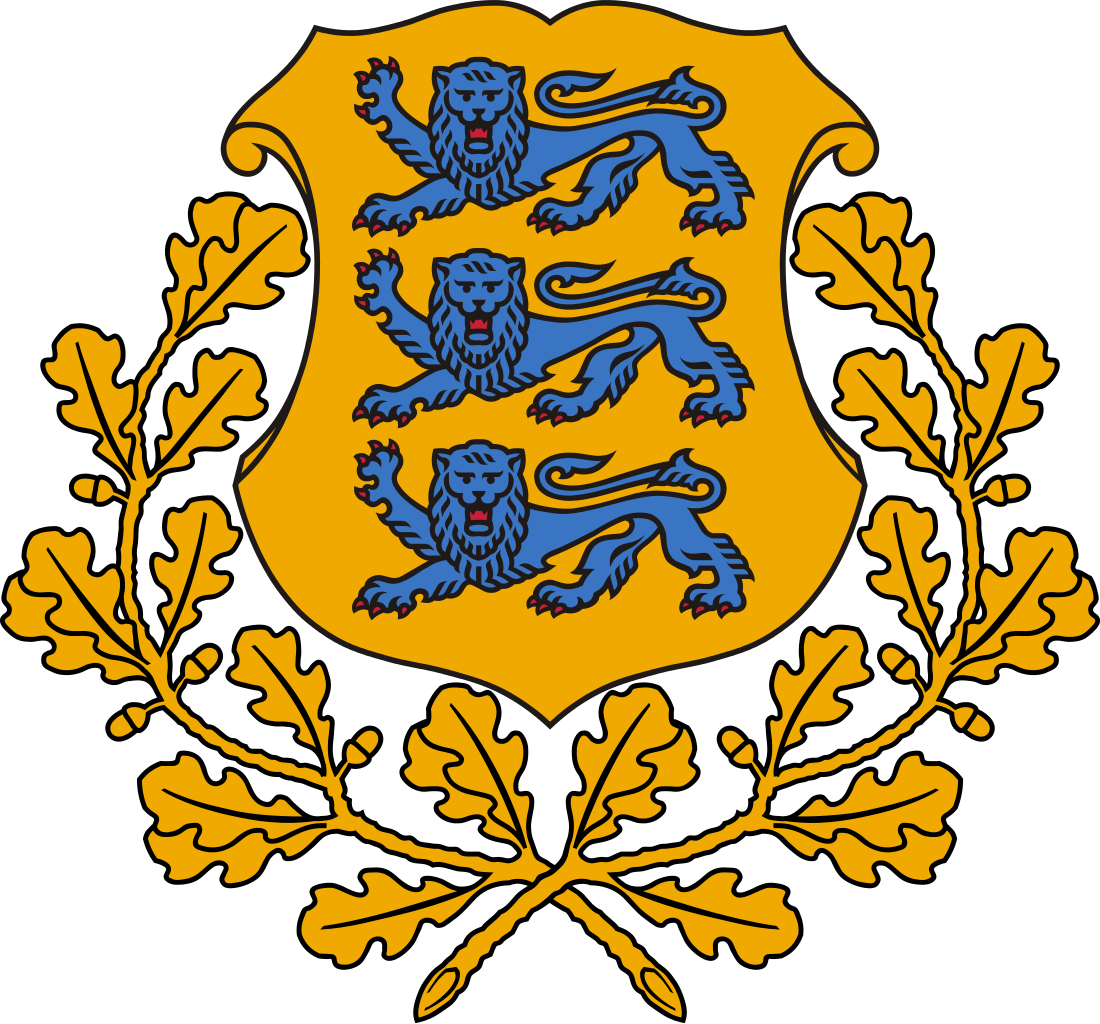
Emblem (National Emblem)
🎵 Anthem (Instrumental)
🎤 Anthem (Vocal)
My native land, my joy and delight,
How beautiful you are!
I shall not find, ever in the world
A place as dear to me
As you, my native land!
May God watch over you,
My precious native land!
Let Him be your defender
And provide bountiful blessings
For whatever you undertake,
My precious native land!
Mu isamaa, mu õnn ja rõõm,
Kui kaunis oled sa!
Ei leia mina iial teal
See suure, laia ilma peal,
Mis mul nii armas oleks ka,
Kui sa, mu isamaa!
Su üle Jumal valvaku,
Mu armas isamaa!
Ta olgu sinu kaitseja
Ja võtku rohkest õnnista,
Mis iial ette võtad sa,
Mu kallis isamaa!
Estonia
Report ErrorIntroduction
About the National Anthem
My Fatherland, My Happiness and Joy-'My Land, My Happiness'-Mu isamaa, mu õnn ja rõõm
< br> 'My Land, My Pleasure' became the national anthem of Estonia in 1920. From 1956 to 1990, the Estonian Soviet Socialist Republic became a member of the Soviet Union. In 1990, Estonia announced that it would change the name of the country to the Republic of Estonia. The song is the national anthem.
< br> 'My Land, My Pleasure' became the national anthem of Estonia in 1920. From 1956 to 1990, the Estonian Soviet Socialist Republic became a member of the Soviet Union. In 1990, Estonia announced that it would change the name of the country to the Republic of Estonia. The song is the national anthem.
Flag Meaning
The ratio is 7:11. It is a blue, black and white tricolor horizontal flag. Blue represents the sky, symbolizing confidence and loyalty. Black represents the land, symbolizing the oppression of foreign races in the past History; white represents the snow and ice of the country, symbolizing freedom, purity and hope for the future.
Emblem Meaning
The national emblem of Estonia is divided into two types. The small national emblem is a shield emblem. The shield ground is golden and there are three on it. The blue lion stretches out its tongue and raises its right forelimb in a stride shape. The large national emblem is decorated with oak branches on the basis of the small national emblem.
🔗 External Resources & Travel Guide
- 📖 Wikipedia: Estonia - History, politics, and geography
- 📊 CIA World Factbook: Estonia - Official government statistics & maps
- ✈️ Wikivoyage: Estonia - Travel guide, attractions, and transport