The Republic of Finland, commonly known as 'Finland', is a country located in northern Europe and one of the five Nordic countries. The Finnish mainland and more than 179,000 islands are divided into 19 administrative regions and 309 municipalities, covering an area of about 338,000 square kilometers. Finland contains about 188,000 lakes, so it has the reputation of 'the country of a thousand lakes.' Finland connects Sweden to the northwest, Norway to the north, and Russia to the east. It is surrounded by the Gulf of Bothnia to the west, the Baltic Sea to the southwest, and the Gulf of Finland to the south.
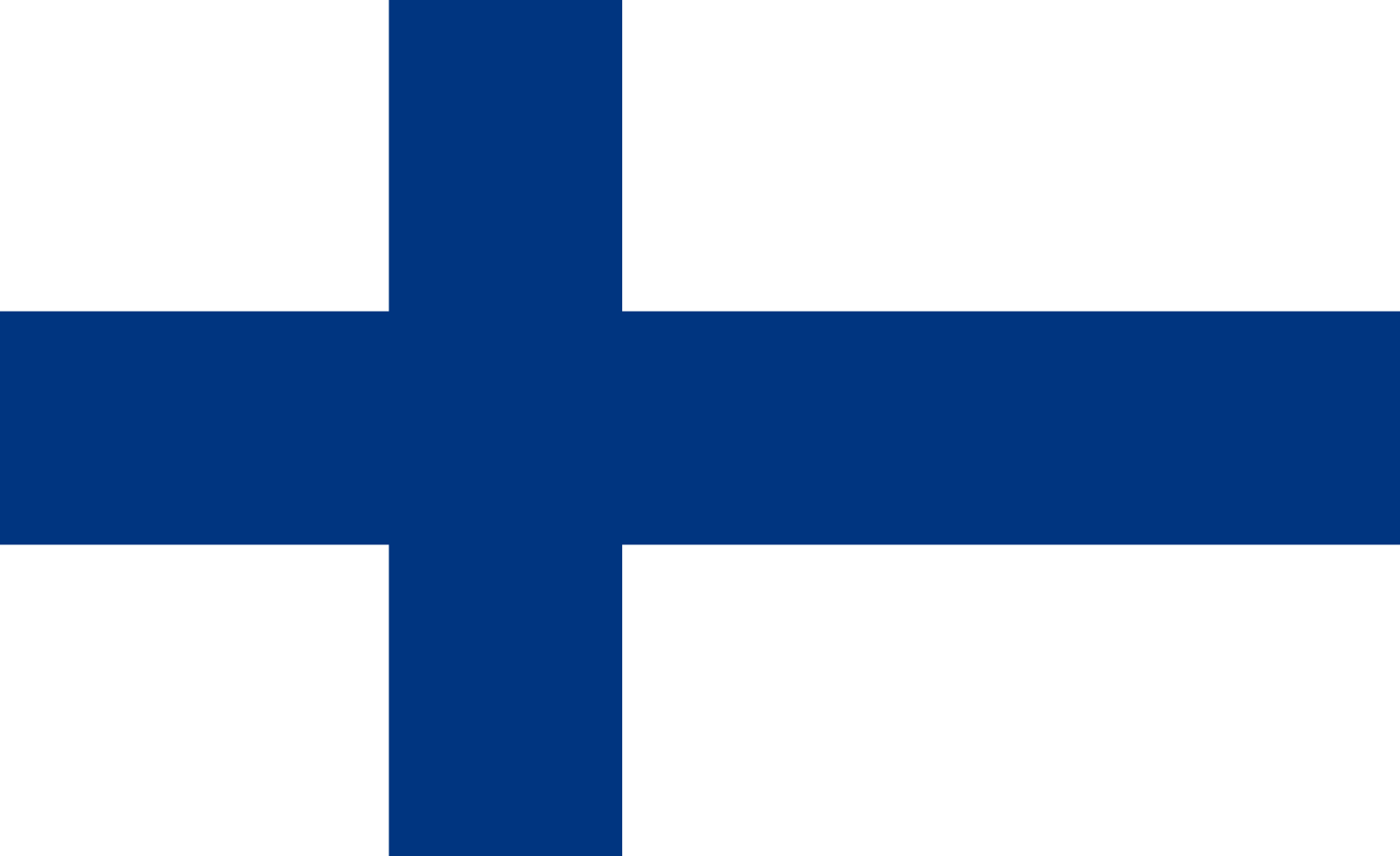
Flag (Flag of Finland)
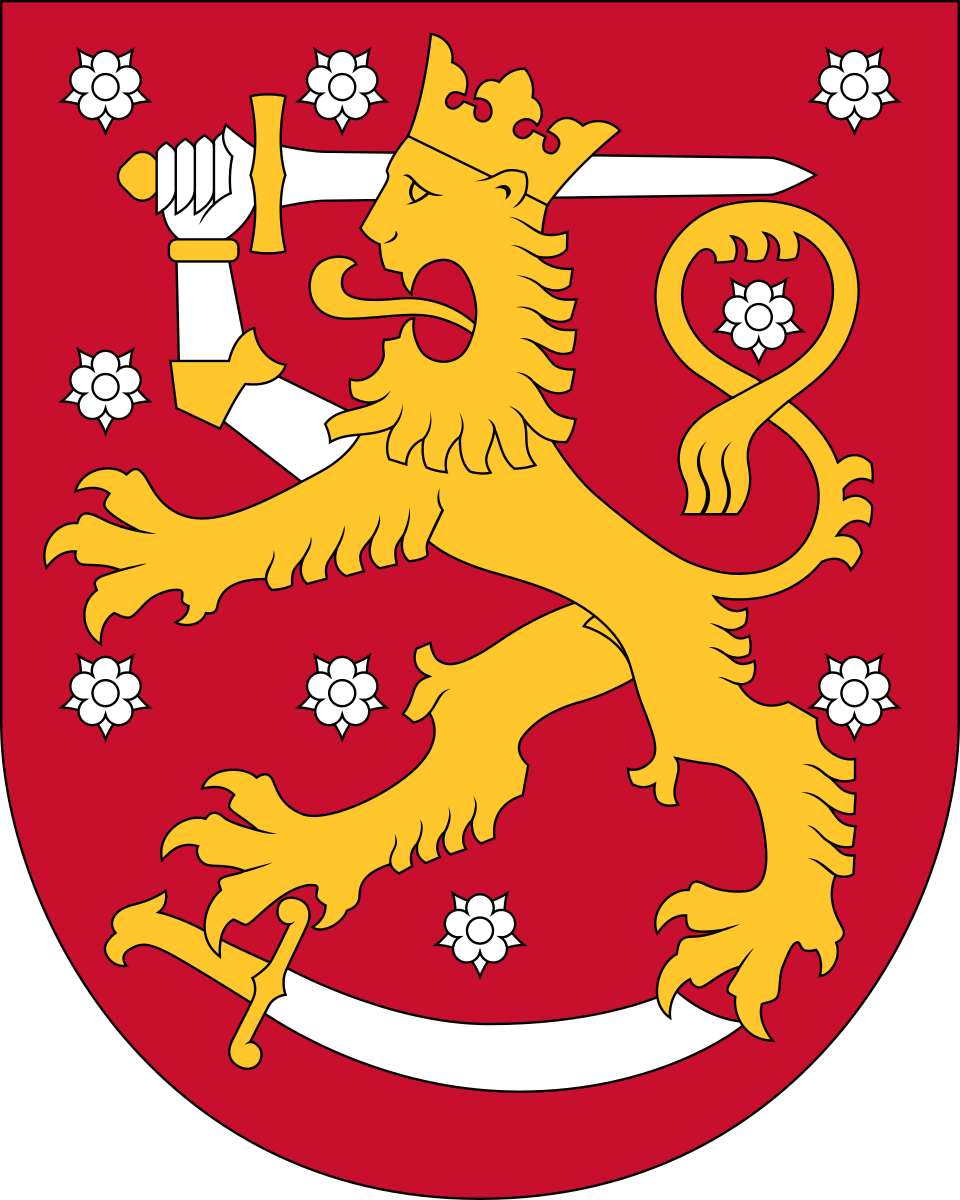
Emblem (National Emblem)
🎵 Anthem (Instrumental)
🎤 Anthem (Vocal)
O our land, Finland, fatherland,
Sound high, O word of gold!
No valley, no hill,
No water, no shore more dear
Than this northern homeland,
Precious land of our fathers!
Our old Finland shall endure,
As long as the beech reflects its crown in the blue wave.
Oi maamme, Suomi, synnyinmaa,
Soi, sana kultainen!
Ei laaksoa, ei kukkulaa,
Ei vettä, rantaa rakkaampaa
Kuin kotimaa tää pohjoinen,
Maa kallis isien!
Sun kukoistukses kuorestaan
Kerrankin puhkeaa;
Viel' lempemme saa nousemaan
Sun toivos, riemus loistossaan,
Ja kerran laulus, synnyinmaa,
Korkeemman kaiun saa.
Finland
Report ErrorIntroduction
About the National Anthem
Our Land-'Our Country'-Maamme-Vårt land
'Our Country' is the national anthem of Finland, first played on May 13, 1848, composed by Frederick Persius, and the national anthem of Estonia The melody of 'My Land, My Pleasure' is roughly the same. The lyrics are excerpts from the masterpiece of romantic nationalism completed in 1846 by the Finnish national poet John Ludwig Runeberg-the poem 'The Legend of the Standard Bearer Stoll', original There are 11 sections in the poem, and the first and last paragraphs of the national anthem are selected. The lyrics were originally Swedish, and were translated into Finnish by Julius Kron in 1867.
'Our Country' is the national anthem of Finland, first played on May 13, 1848, composed by Frederick Persius, and the national anthem of Estonia The melody of 'My Land, My Pleasure' is roughly the same. The lyrics are excerpts from the masterpiece of romantic nationalism completed in 1846 by the Finnish national poet John Ludwig Runeberg-the poem 'The Legend of the Standard Bearer Stoll', original There are 11 sections in the poem, and the first and last paragraphs of the national anthem are selected. The lyrics were originally Swedish, and were translated into Finnish by Julius Kron in 1867.
Flag Meaning
(Details not available yet)
Emblem Meaning
The Finnish national emblem (Finnish: Suomen vaakuna) was adopted at the funeral of King Gustav I in 1560. It is also the national emblem of the Republic of Finland and the national emblem of the Grand Duchy of Finland .
The description of the national emblem in the Finnish National Emblem Act is: 'Red, among the nine silver roses, a roaring lion wearing a crown, the right front hoof is the armoured hand, brandishing a long sword and feet Stepping on the flipped scimitar. '[Note 1]
It is speculated that the lion on the national emblem comes from the Falcon family, and it also appears on the national emblem of Sweden. The sword and machete are similar to the national emblem of the Republic of Karelia. The one stepped on the lion’s foot The Russian scimitar reflects the political situation at that time. At that time, the Swedish Empire and the Russian Empire were in a long-term war. The nine roses are supposed to represent nine provinces in Finnish history, but the number of roses has changed several times.
The national emblem of Finland is also reflected on the flags of the Finnish state organs.
The description of the national emblem in the Finnish National Emblem Act is: 'Red, among the nine silver roses, a roaring lion wearing a crown, the right front hoof is the armoured hand, brandishing a long sword and feet Stepping on the flipped scimitar. '[Note 1]
It is speculated that the lion on the national emblem comes from the Falcon family, and it also appears on the national emblem of Sweden. The sword and machete are similar to the national emblem of the Republic of Karelia. The one stepped on the lion’s foot The Russian scimitar reflects the political situation at that time. At that time, the Swedish Empire and the Russian Empire were in a long-term war. The nine roses are supposed to represent nine provinces in Finnish history, but the number of roses has changed several times.
The national emblem of Finland is also reflected on the flags of the Finnish state organs.
🔗 External Resources & Travel Guide
- 📖 Wikipedia: Finland - History, politics, and geography
- 📊 CIA World Factbook: Finland - Official government statistics & maps
- ✈️ Wikivoyage: Finland - Travel guide, attractions, and transport