The Republic of France, commonly known as France, is a sovereign country with overseas regions and territories located in Western Europe. Since the establishment of the Fifth Republic, the unity and semi-presidential system have been implemented. The capital is Paris, the largest cultural and financial center of the European continent. The country extends from the Mediterranean Sea to the English Channel and the North Sea, and from the Rhine River to the Atlantic Ocean. The overall shape is hexagonal. The overseas territories include French Guiana in South America and islands in the Atlantic, Pacific and Indian Oceans. The country is divided into 18 regions, 5 of which are located overseas. France, Spain and Morocco have both the Mediterranean and Atlantic coastlines. France’s land area is the 41st in the world, but it is the largest country in the European Union and Western Europe, and the third largest country in Europe.

Flag (Flag of France)
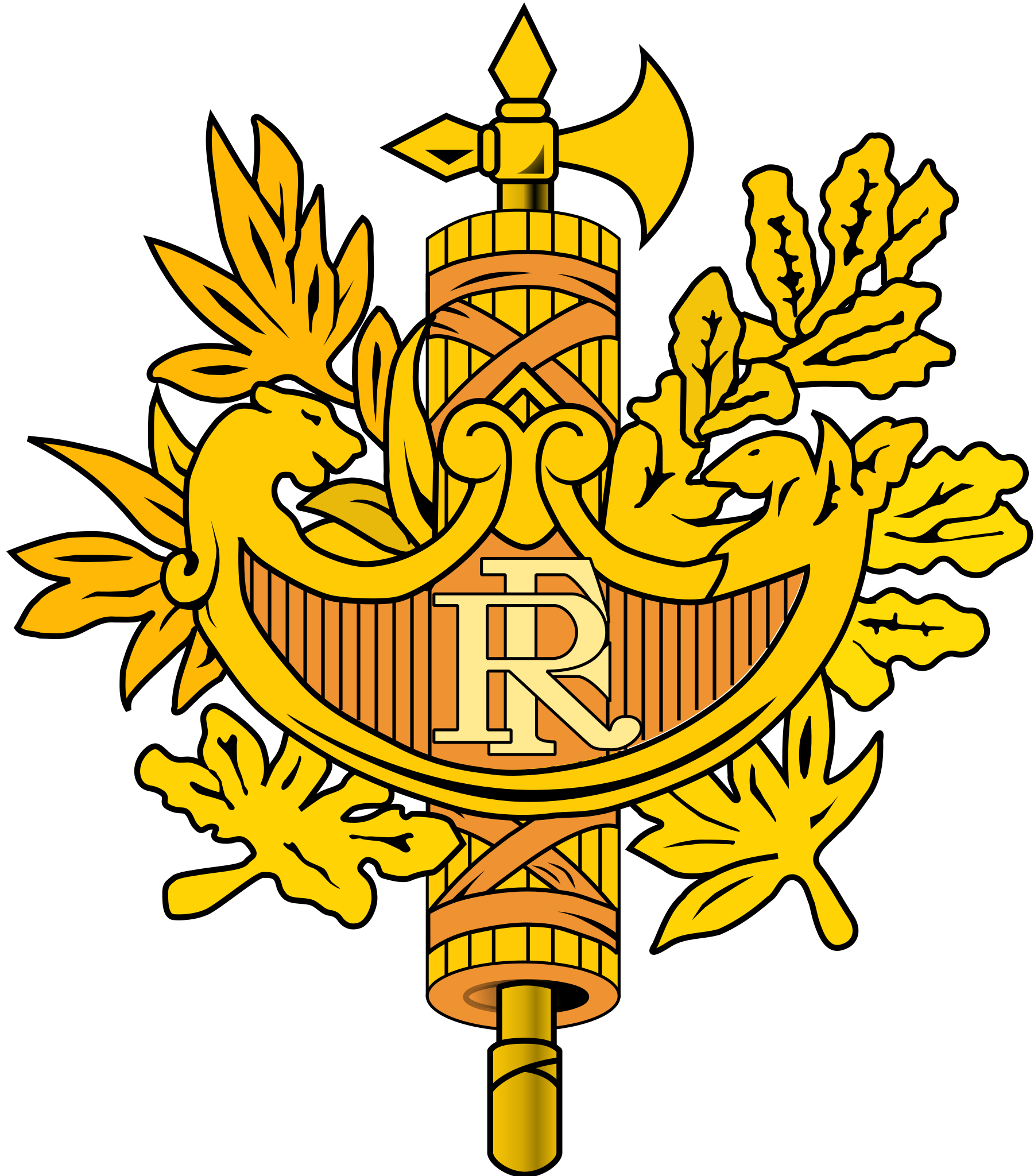
Emblem (National Emblem)
🎵 Anthem (Instrumental)
🎤 Anthem (Vocal)
Arise, children of the Fatherland,
The day of glory has arrived!
Against us, tyranny's
Bloody standard is raised,
Do you hear, in the countryside,
The roar of those ferocious soldiers?
They're coming right into your arms
To cut the throats of your sons, your women!
To arms, citizens,
Form your battalions,
March, march!
Let an impure blood
Water our furrows!
Allons enfants de la Patrie,
Le jour de gloire est arrivé !
Contre nous de la tyrannie,
L'étendard sanglant est levé,
Entendez-vous dans les campagnes
Mugir ces féroces soldats ?
Ils viennent jusque dans vos bras
Égorger vos fils, vos compagnes !
Aux armes, citoyens,
Formez vos bataillons,
Marchons, marchons !
Qu'un sang impur
Abreuve nos sillons !
France
Report ErrorIntroduction
About the National Anthem
The Marseillaise-'Marseille'-La Marseillaise
'Marseillaise' is the French national anthem, also translated as 'Marseille March'. The lyrics were written by Claude Joseph Rouge de Lille in April 1792. It was composed on the 25th, and the tune was from the Italian composer Giovanni Battista Viotti's 'C Major Theme Variations' in 1781. At that time, during the French Revolution, France declared war on the Austrian Empire. The French Revolutionary War and the First Anti-French Alliance. On the evening of that day, he composed the song at the house of Detrich, the then mayor of Strasbourg, and was titled 'The Battle Hymn of the Rhine Legion'; August 10 of the same year, from Volunteers from Marseilles went to Paris to support the Tuileries uprising and sang this song and got its current name, and it became popular throughout France. On July 14, 1795, the National Convention declared this song as the national anthem.
'Marseillaise' is the French national anthem, also translated as 'Marseille March'. The lyrics were written by Claude Joseph Rouge de Lille in April 1792. It was composed on the 25th, and the tune was from the Italian composer Giovanni Battista Viotti's 'C Major Theme Variations' in 1781. At that time, during the French Revolution, France declared war on the Austrian Empire. The French Revolutionary War and the First Anti-French Alliance. On the evening of that day, he composed the song at the house of Detrich, the then mayor of Strasbourg, and was titled 'The Battle Hymn of the Rhine Legion'; August 10 of the same year, from Volunteers from Marseilles went to Paris to support the Tuileries uprising and sang this song and got its current name, and it became popular throughout France. On July 14, 1795, the National Convention declared this song as the national anthem.
Flag Meaning
(Details not available yet)
Emblem Meaning
(Details not available yet)
🔗 External Resources & Travel Guide
- 📖 Wikipedia: France - History, politics, and geography
- 📊 CIA World Factbook: France - Official government statistics & maps
- ✈️ Wikivoyage: France - Travel guide, attractions, and transport