The Republic of Argentina, commonly known as Argentina. It is a federation of 23 provinces and the autonomous city of Buenos Aires The Republic is located in southern South America and occupies most of the Southern Cone. It borders Bolivia and Paraguay to the north, Brazil to the northeast, Uruguay and the South Atlantic Ocean to the east, Chile to the west, and the Drake Strait to the south. The territory covers an area of 2,780,400 square kilometers. It ranks eighth in the world, second in Latin America, and the first among Spanish-speaking countries. It spans multiple climatic zones. Argentina advocates for a part of Antarctica, the Malvinas Islands (the British called the Falkland Islands), and South Georgia And the South Sandwich Islands have sovereignty.
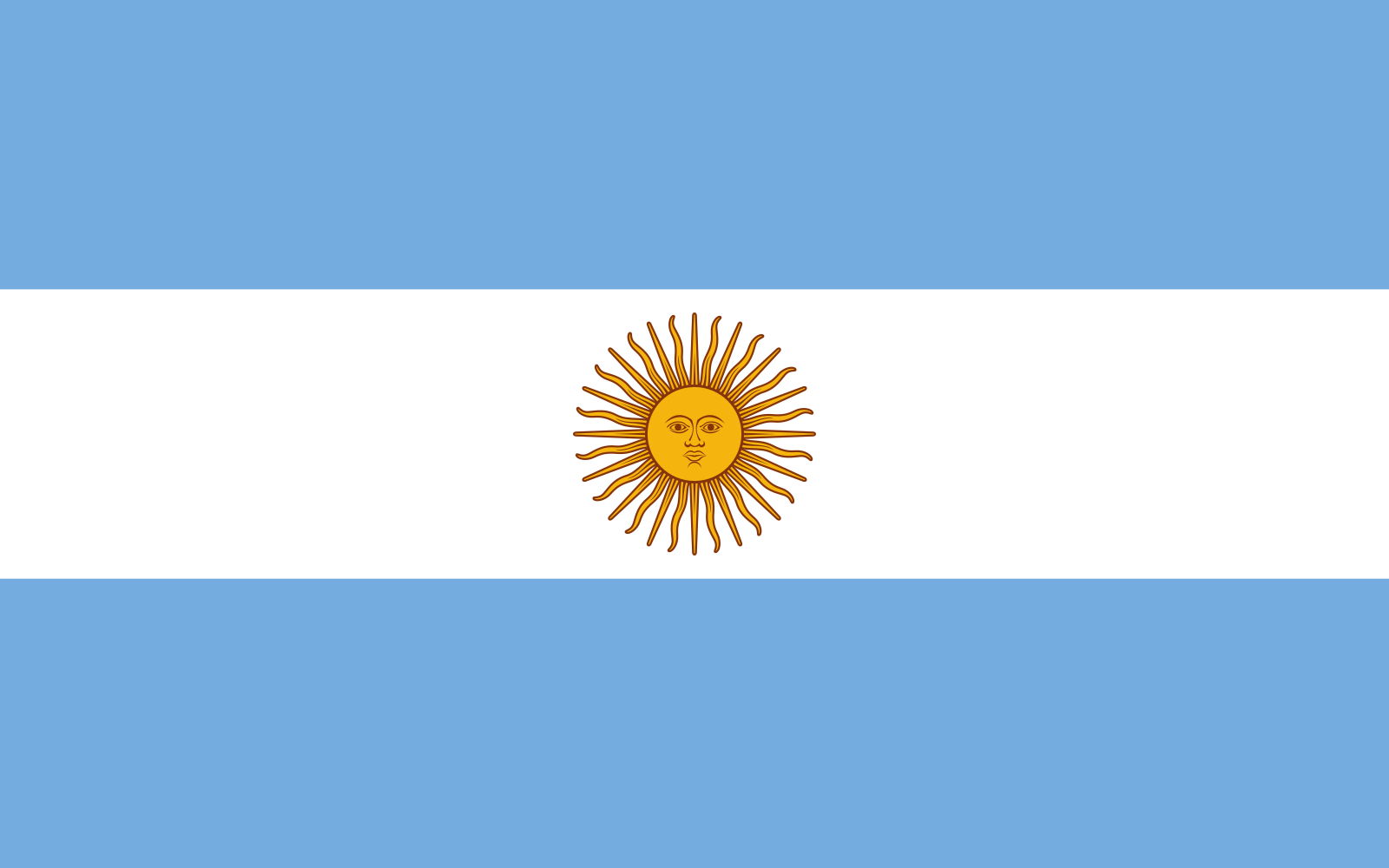
Flag (Flag of Argentina)
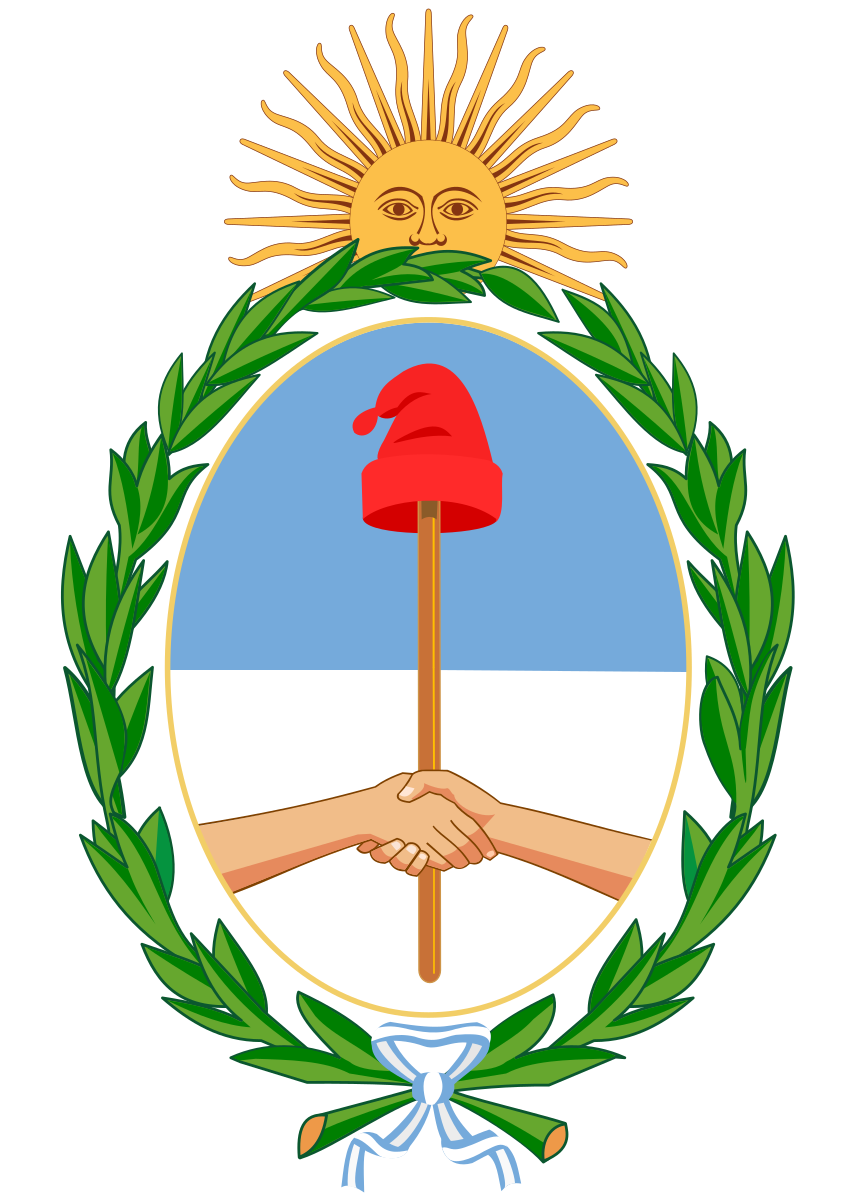
Emblem (National Emblem)
🎵 Anthem (Instrumental)
🎤 Anthem (Vocal)
Hear, mortals, the sacred cry:
"Freedom! Freedom! Freedom!"
Hear the noise of broken chains,
See noble Equality enthroned.
The United Provinces of the South
Have opened their most honorable throne,
And the free people of the world reply:
"To the great Argentine people, hail!"
May the laurels be eternal
That we knew how to win.
Let us live crowned with glory,
Or swear to die gloriously!
¡Oíd, mortales, el grito sagrado:
"¡Libertad, libertad, libertad!"
Oíd el ruido de rotas cadenas,
ved en trono a la noble igualdad.
Ya su trono dignísimo abrieron
las Provincias Unidas del Sud.
Y los libres del mundo responden:
"¡Al gran pueblo argentino, salud!"
¡Sean eternos los laureles
que supimos conseguir!
¡Coronados de gloria vivamos...
o juremos con gloria morir!
Argentina
Report ErrorIntroduction
About the National Anthem
Argentine National Anthem-'Argentine National Anthem'-Himno Nacional Argentino
'Argentine National Anthem' by Vicente Rope Lyrics by Zíe Planes and music by Blas Parrera. Three years after the May Revolution in Argentina, it was officially confirmed as Argentina’s national anthem on May 11, 1813, so it was also Argentina on May 11. 'National Anthem Day'.
'Argentine National Anthem' by Vicente Rope Lyrics by Zíe Planes and music by Blas Parrera. Three years after the May Revolution in Argentina, it was officially confirmed as Argentina’s national anthem on May 11, 1813, so it was also Argentina on May 11. 'National Anthem Day'.
Flag Meaning
Ratio 9:14. Sky blue, white, and sky blue three horizontal flags, the sun in the middle of May is the national emblem. White and sky blue symbolize justice and justice The May Sun originated on May 25, 1810, when the Argentine people were discussing independence issues in Buenos Aires Square. It was a gloomy weather that day; suddenly there was a ray of sunlight shining down from the clouds, and people thought it was A good sign, so the sun in May became a symbol of the nation.
Emblem Meaning
The national emblem of Argentina originated in 1813 and was shaped in 1944. It is oval in shape. The hands are clenched. The pole of freedom and the 'cap of freedom” on the pole are the symbols of the patriots in the 19th century Latin American War of Liberation; the laurel wreath symbolizes victory. The 'May Sun” symbolizes freedom and liberation.
🔗 External Resources & Travel Guide
- 📖 Wikipedia: Argentina - History, politics, and geography
- 📊 CIA World Factbook: Argentina - Official government statistics & maps
- ✈️ Wikivoyage: Argentina - Travel guide, attractions, and transport