The Republic of Kazakhstan, commonly known as a transcontinental country, straddles Europe and Asia, and is mainly located in Central Asia In the north, a small part of the territory west of the Ural River is located in Europe. Kazakhstan covers an area of 2,727,300 square kilometers, which is the largest landlocked country in the world and the ninth largest country in the world. The Kazakh economy is dominant in Central Asia and occupies production in Central Asia. 60% of the total value is dominated by oil and natural gas industries, as well as rich mineral resources. Kazakhstan is also a Turkic country in Central Asia culturally.
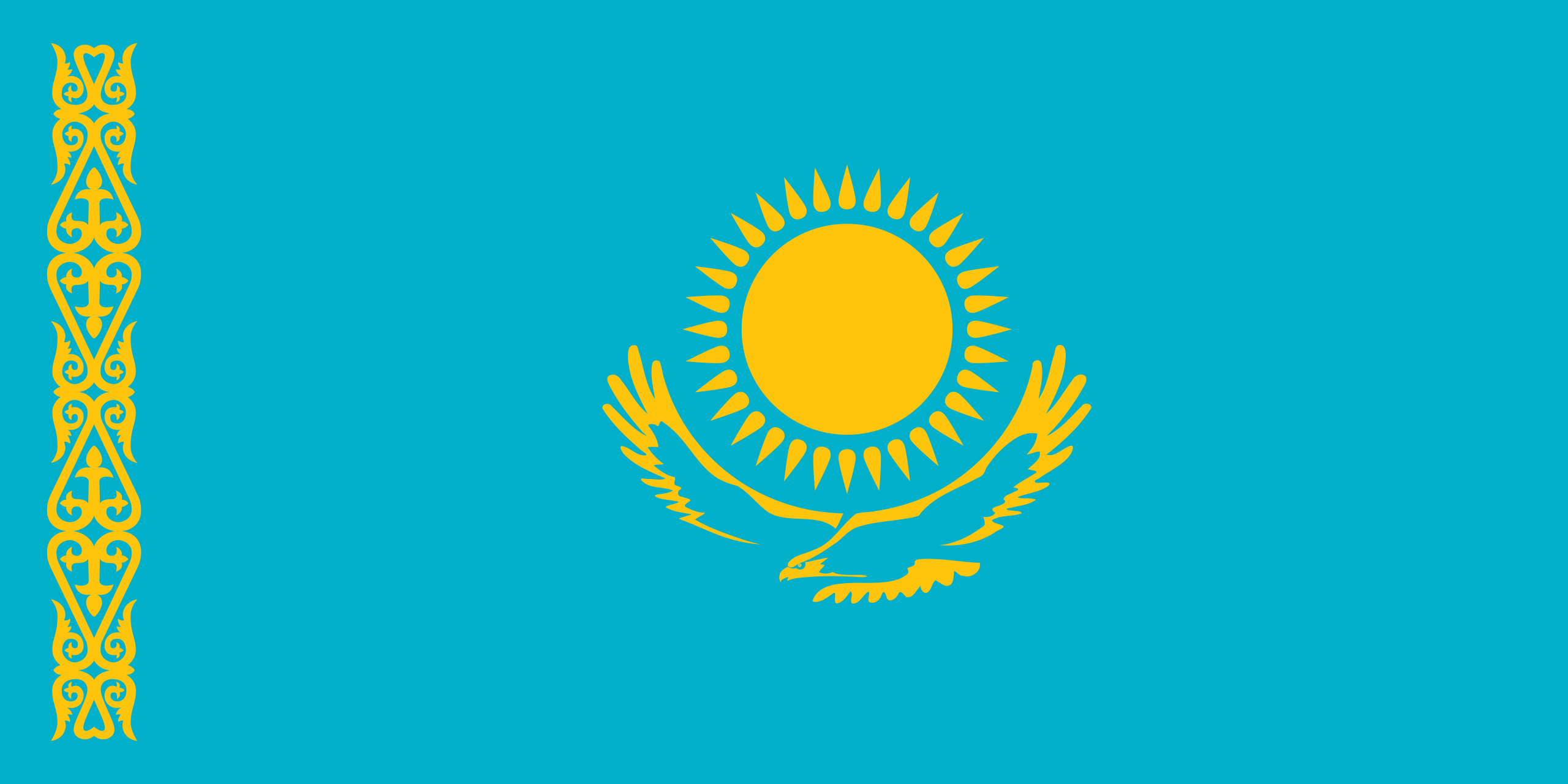
Flag (Flag of Kazakhstan)
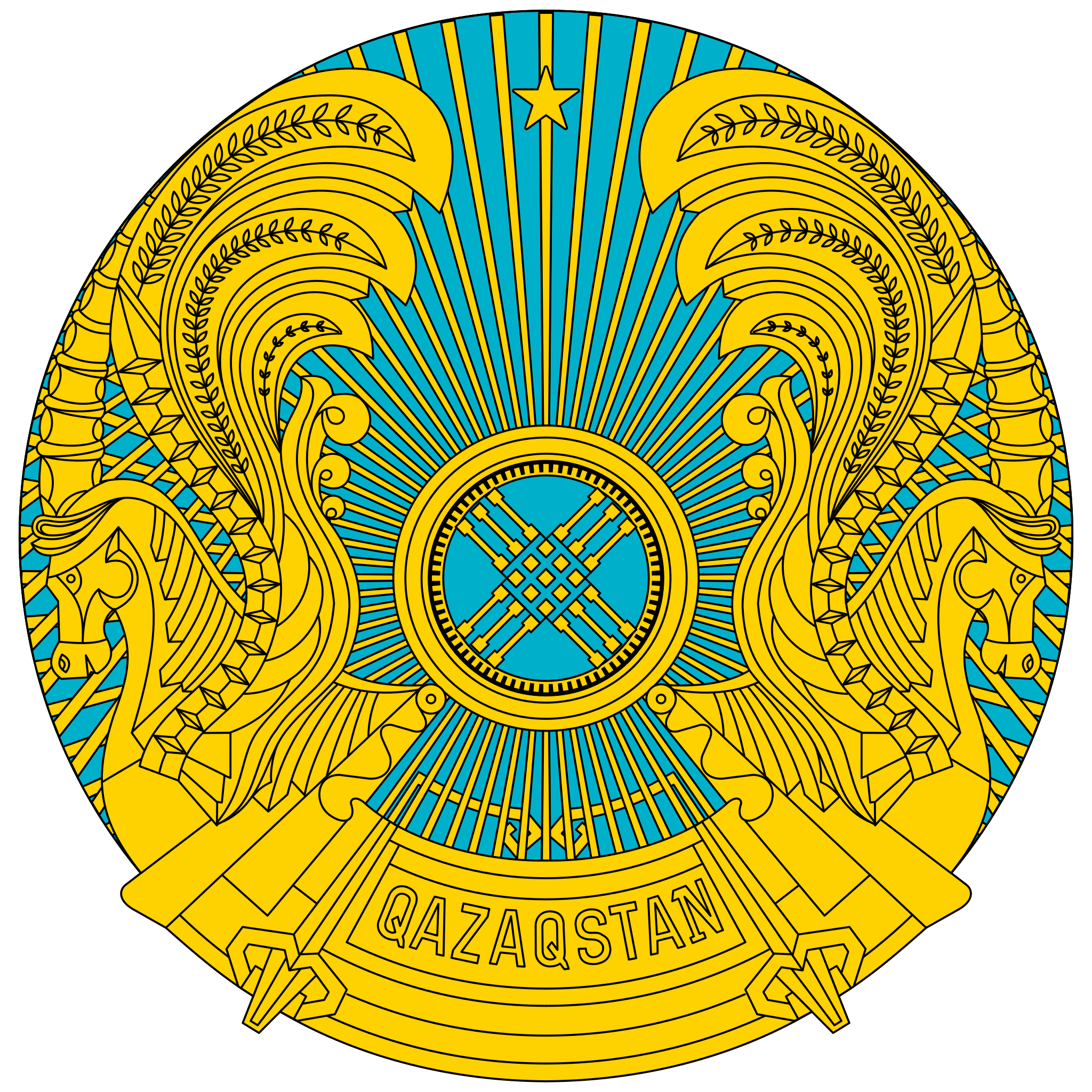
Emblem (National Emblem)
🎵 Anthem (Instrumental)
🎤 Anthem (Vocal)
Sky of golden sun,
Steppe of golden seed,
Legend of courage –
Take a look at my country!
From the antiquity
Our heroic glory emerged,
They did not give up their pride
My Kazakh people are strong!
My country, my country,
As your flower I will be planted,
As your song I will stream, my country!
My native land – My Kazakhstan!
Алтын күн аспаны,
Алтын дән даласы,
Ерліктің дастаны,
Еліме қарашы!
Ежелден ер деген,
Даңқымыз шықты ғой,
Намысын бермеген,
Қазағым мықты ғой!
Менің елім, менің елім,
Гүлің болып егілемін,
Әнің болып төгілемін, елім!
Жұртым менің – Қазақстаным!
Kazakhstan
Report ErrorIntroduction
About the National Anthem
My Kazakhstan-'My 'Kazakhstan'-Менің Қазақстаным
'My Kazakhstan' is the national anthem of Kazakhstan, which was formally formulated on January 7, 2006. The original song is a song to commemorate the Soviet Union’s virgin land plan, composed in 1956, Lyrics by Жұмекен Нәжімеденов, and Шәмші Қалдаяқов. In the following decades, 'My Kazakh' gradually became a song familiar to Kazakhs.
'My Kazakhstan' is the national anthem of Kazakhstan, which was formally formulated on January 7, 2006. The original song is a song to commemorate the Soviet Union’s virgin land plan, composed in 1956, Lyrics by Жұмекен Нәжімеденов, and Шәмші Қалдаяқов. In the following decades, 'My Kazakh' gradually became a song familiar to Kazakhs.
Flag Meaning
ratio 1:2. Blue The bottom flag has a yellow patterned vertical bar on the left and a yellow sun and eagle on the right. Blue represents the blue sky of Kazakhstan, symbolizing luck, tranquility, peace and unity. The 32-ray sun represents the lofty ideals of the country, and the eagle is in According to the legend of the Kazakh people, they can look directly at the sun without being burned, and represent the freedom of the nation. The yellow vertical stripes are the patterns on the national costumes of Kazakhstan, representing its traditional culture and national characteristics.
Emblem Meaning
The national emblem of Kazakhstan was inaugurated on June 4, 1992. It is circular, with blue and gold as the main colors. In the middle is the skylight of the yurt with a five-pointed star. The left and right sides are supported by Tianma. The following ribbon is written 'Kazakh Stan'.
🔗 External Resources & Travel Guide
- 📖 Wikipedia: Kazakhstan - History, politics, and geography
- 📊 CIA World Factbook: Kazakhstan - Official government statistics & maps
- ✈️ Wikivoyage: Kazakhstan - Travel guide, attractions, and transport