The Republic of Austria, commonly known as Austria, is a landlocked country in Central Europe, but historically it has also been classified as Sovereign countries in Western or Eastern Europe. Austria borders many countries, with Hungary and Slovakia to the east, Italy and Slovenia to the south, Liechtenstein and Switzerland to the west, and Germany and the Czech Republic to the north. The capital and largest city is Vienna with a population of over 8.6 million. The country covers an area of 83,855 square meters (32,377 square miles). At the same time, due to the existence of the Alps, Austria has become a mountainous country. Only 32% of the land is below 500 (1,600 feet) above sea level, and the highest point is 3,798 (12,461 feet) above sea level.
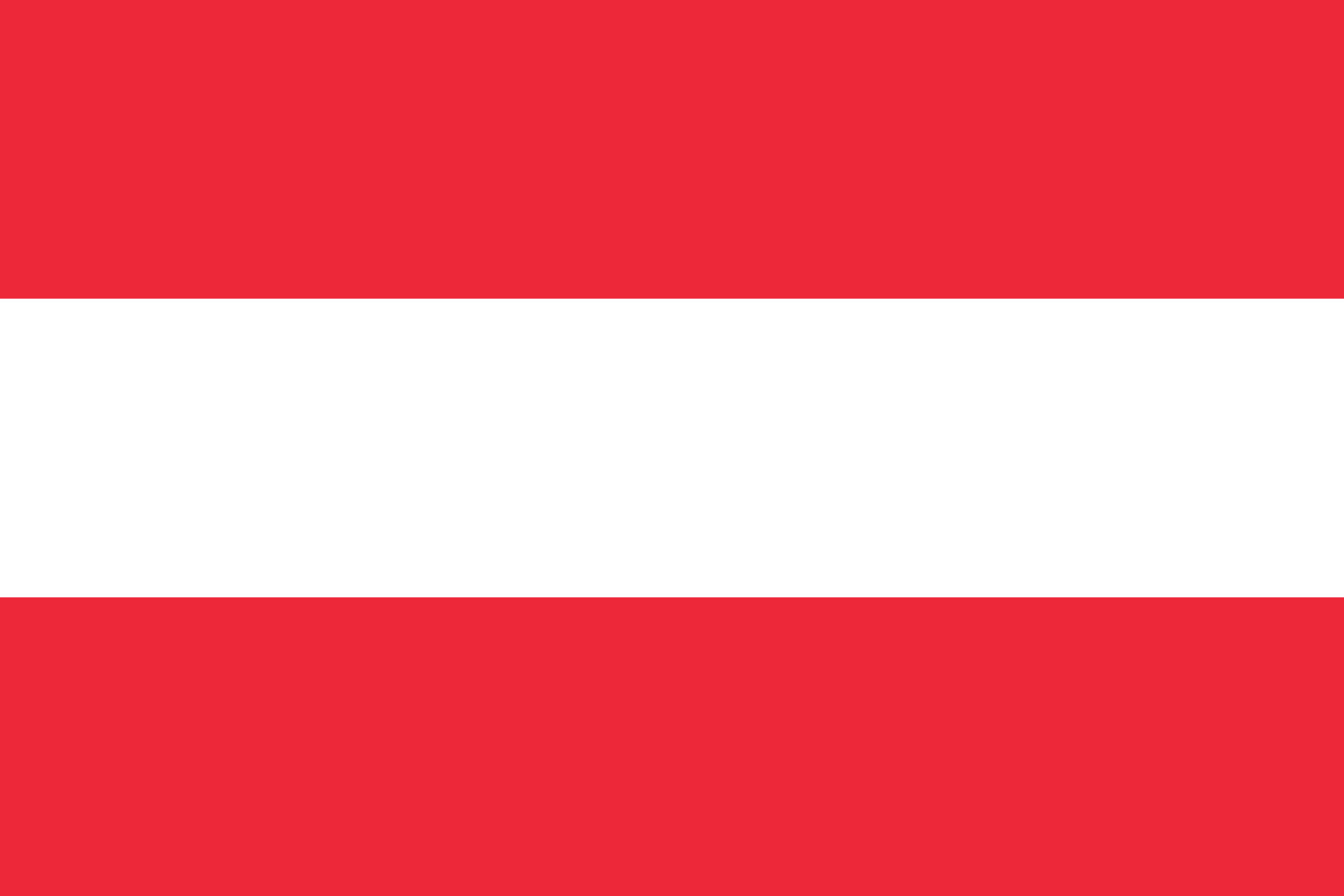
Flag (Flag of Austria)
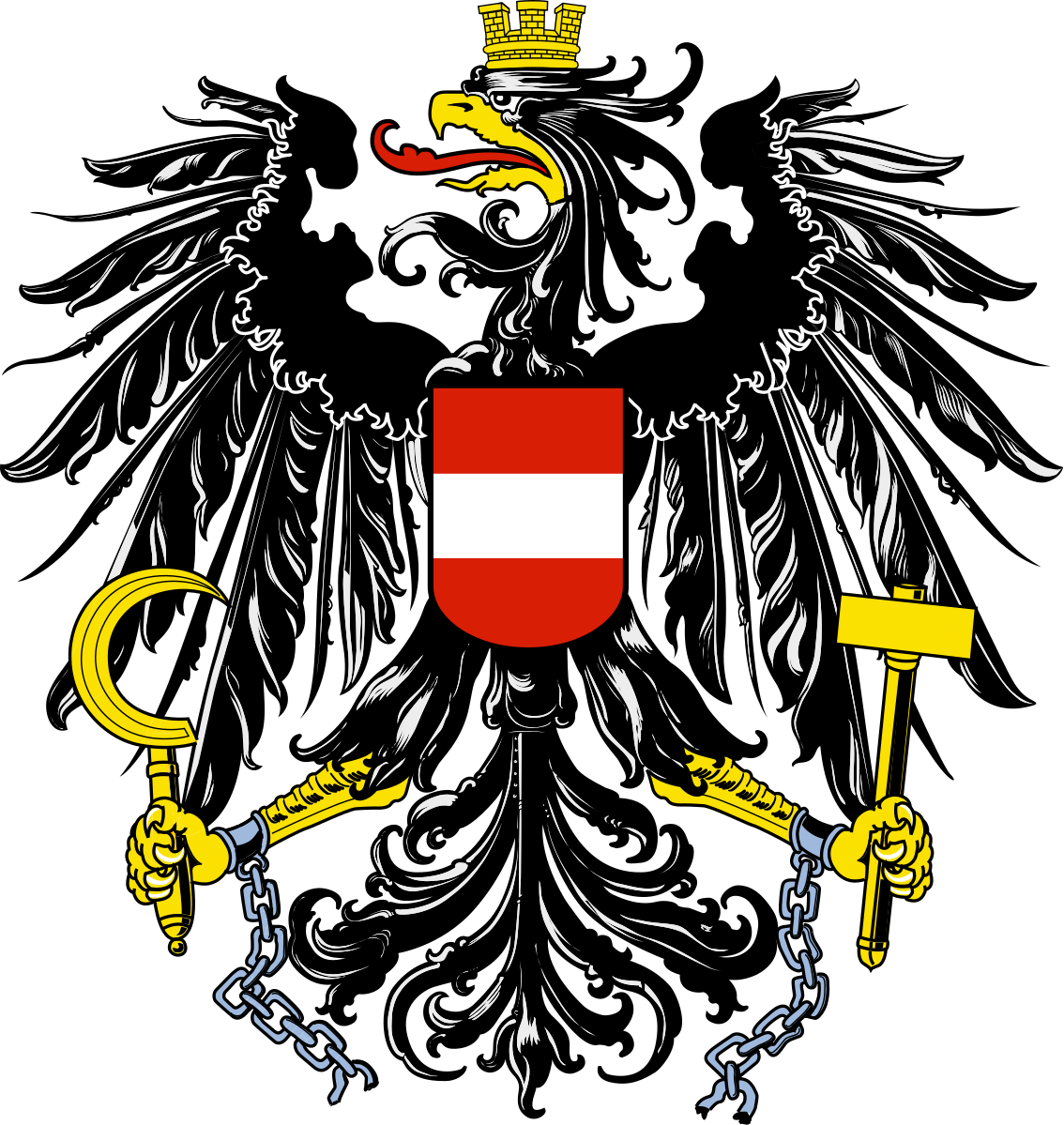
Emblem (National Emblem)
🎵 Anthem (Instrumental)
🎤 Anthem (Vocal)
Land of mountains, land by the river,
Land of fields, land of cathedrals,
Land of hammers, future-oriented!
Home of great daughters and sons,
People endowed with beauty,
Much-praised Austria,
Much-praised Austria!
Hotly contested, fiercely fought over,
You lie in the centre of the continent,
Like a strong heart.
Since the early days of the ancestors
You have borne the burden of a high mission,
Much-tried Austria,
Much-tried Austria!
Courageously into the new times,
Free and faithful we stride,
Working cheerfully and full of hope.
In fraternal choirs united,
We pledge allegiance to you, Fatherland,
Our much-beloved Austria,
Our much-beloved Austria!
Land der Berge, Land am Strome,
Land der Äcker, Land der Dome,
Land der Hämmer, zukunftsreich!
Heimat großer Töchter und Söhne,
Volk, begnadet für das Schöne,
Vielgerühmtes Österreich,
Vielgerühmtes Österreich!
Heiß umfehdet, wild umstritten,
Liegst dem Erdteil du inmitten
Ein starkes Herz.
Hast seit frühen Ahnentagen
Hoher Sendung Last getragen,
Vielf versucht Österreich,
Vielf versucht Österreich!
Mutig in die neuen Zeiten,
Frei und gläubig sieh uns schreiten,
Arbeitsfroh und hoffnungsreich.
Einig laß in Brüderchören,
Vaterland, dir Treue schwören,
Vielgeliebtes Österreich,
Vielgeliebtes Österreich!
Austria
Report ErrorIntroduction
About the National Anthem
National Anthem of the Republic of Austria-'Mountain Land, River Land'-Land der Berge, Land am Strome
'Mountain Land, River Land' , Is the national anthem of Austria, and is also famous for its opening 'Land der Berge, Land am Strome'.
'Mountain Land, River Land' , Is the national anthem of Austria, and is also famous for its opening 'Land der Berge, Land am Strome'.
Flag Meaning
The ratio is 2:3. Red, white, red, two colors and three horizontal flags. The design of the flag is derived from the red, white and red medal of the Duke Leo Bird V. In 1192, during the Crusades of Leo Bird V, his white robe was stained red with blood, and only the middle belt was still white. After returning to the country, he was awarded a red, white, and red medal by the Holy Roman Emperor, and then became the source of the design of the national flag.
Emblem Meaning
The national emblem of the Republic of Austria was created after the liberation of Austria from Nazi Germany in 1945. The national emblem used. The double-headed eagle of the Austro-Hungarian Empire before World War I was replaced by the single-headed black eagle representing Austria. The broken iron chain represents Austria's regaining freedom in 1945. The hammer and sickle respectively symbolize the two parts of Austria. Big class, workers and peasants.
🔗 External Resources & Travel Guide
- 📖 Wikipedia: Austria - History, politics, and geography
- 📊 CIA World Factbook: Austria - Official government statistics & maps
- ✈️ Wikivoyage: Austria - Travel guide, attractions, and transport